


Struggling to Gain Weight: A Hardgainer’s Guide
Many naturally thin people feel doomed to stay skinny forever, even when they work hard in the gym. The reality is that most “hardgainers” are not limited by genetics as much as by under-eating, inefficient workouts, and poor recovery. Bulking up fast as a skinny guy is absolutely possible, but it requires a clear strategy: eat in a calorie surplus, follow a smart strength training plan that prioritizes progressive overload, and give the body enough rest to build new muscle.
A key lesson from years of trial and error is that muscle is built in the kitchen as much as in the gym. Skinny guys often train hard, drink protein shakes, and still fail to gain weight because they simply are not eating enough calories to support muscle growth. The body burns a surprising number of calories just staying alive each day, and activity, fidgeting, and cardio raise that even more. Calculating total daily energy expenditure (TDEE) gives a rough idea of maintenance needs; from there, adding calories is what drives weight gain. A sensible target is to gain about 0.25–0.5% of body weight per week. For a 150-pound person, that is roughly 0.3–0.75 pounds weekly, which usually means eating 200–400 extra calories per day above maintenance and adjusting every few weeks based on the scale and progress photos.
Fast transformations are possible with aggressive eating, heavy training, and strategies like creatine that add water weight, but most sustainable muscle gain is slower. Under realistic conditions, many lifters see around 1–2 pounds of lean mass per month when they bulk up correctly. Gaining far faster than that usually means a larger portion of the added weight is body fat. For someone who wants to bulk like the Hulk without getting overly soft, a modest, consistent surplus works better than chasing huge monthly jumps and then having to crash diet.
Within that calorie surplus, protein intake is the first priority. Protein provides the building blocks for muscle repair and growth after strength training. Aiming for roughly 0.8–1 gram of protein per pound of body weight per day covers most muscle-building needs. That means a 150-pound person would shoot for 120–150 grams daily from sources like meat, fish, poultry, eggs, dairy, and legumes. Those who get most of their protein from plant sources may benefit from targeting the higher end of this range to account for less complete amino acid profiles. Once protein is in place, the rest of the calories can come from carbohydrates and fats.
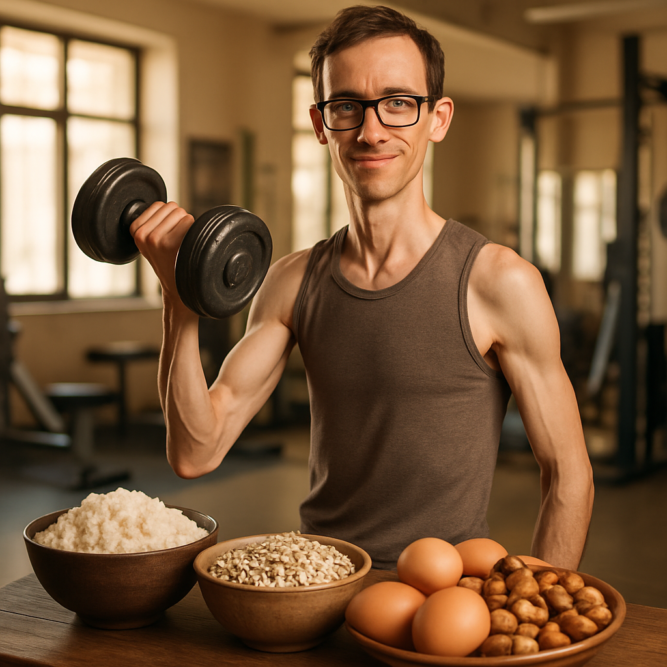
Carbohydrates are especially useful for bulking up because they replenish muscle glycogen and provide quick energy for hard workouts. Filling the plate with starches like rice, oats, potatoes, sweet potatoes, whole grain pasta, and legumes helps keep training performance high and prevents the body from breaking down muscle tissue for fuel. Fats are equally important, particularly for skinny guys who struggle to eat enough. Healthy fats such as nuts, nut butters, avocado, olive oil, and full-fat dairy pack a lot of calories into small portions, making it easier to stay in a surplus without feeling stuffed all day. Saturated fat can also be part of a bulking diet in moderation, coming from foods like whole milk, cheese, and fatty cuts of meat. Vegetables and fruits round out the plan by adding fiber, vitamins, and minerals that keep digestion and overall health on track while food intake climbs.
When someone is not gaining weight despite “eating a lot,” the simplest fix is usually to add more carbs and fats to each meal and, if needed, more meals throughout the day. Tracking calories for a week or two with an app can reveal how big the current gap really is. Often the numbers show that intake is hundreds of calories below what is needed to bulk up, even if the person feels like they are constantly eating.
Supplements are often overhyped, but a couple can genuinely help skinny guys bulk up faster. Protein powder is mainly just a convenient food, yet it is extremely useful for hitting daily protein targets and adding extra calories with minimal effort. Blended into a smoothie with oats, fruit, and nut butter, it becomes a powerful tool for muscle gain. Creatine is another evidence-backed supplement for bulking, helping muscles store more water, improving high-intensity performance, and supporting muscle growth over time. Beyond these, most fancy powders and pills add little that cannot be achieved through food and training.
Liquid calories in general are a secret weapon for hardgainers. Drinking calories does not create the same fullness as chewing large meals, so shakes and smoothies make it easier to reach a calorie surplus without feeling miserable. A typical mass-building shake might include water or milk, oats, frozen berries, spinach, protein powder, and a drizzle of oil or nut butter. Those who struggle with appetite can also keep protein at the lower end of the recommended range so it does not crowd out higher-calorie carbs and fats.
Training is the other pillar of bulking up. To turn those extra calories into muscle instead of just fat, the body needs a strong signal from strength training. The most important concept is progressive overload: regularly challenging the muscles with more work over time. That can mean lifting heavier weights, performing more repetitions, or adding sets as strength improves. Big compound exercises like squats, deadlifts, bench presses, overhead presses, rows, pull-ups, and dips are especially effective because they recruit many muscle groups at once and allow steady loading as someone gets stronger.
For muscle growth, most beginners and intermediates do well with 10–20 working sets per muscle group per week, using mainly 6–15 repetitions per set and stopping within 1–3 reps of technical failure. Each repetition should be controlled, especially on the lowering phase, with a smooth but powerful push or pull on the way up. Training each major muscle group at least twice per week, often through full-body workouts two to four times weekly, delivers good results without living in the gym. The key is to keep adding weight, reps, or sets over time while staying consistent.
Bodyweight training can also be a powerful way to bulk up, provided the exercises are challenging enough. Gymnasts are proof that heavy weights are not required to build impressive size and strength. Movements like push-ups, pull-ups, dips, rows, lunges, and single-leg squats can all build muscle when taken close to failure. To keep progressing, leverage and difficulty need to increase: elevating the feet on push-ups, progressing to pistol squats, or adding weight to pull-ups are examples of making bodyweight work harder over time.
Skinny-fat individuals, who have thin limbs but carry extra fat around the midsection, often wonder whether to bulk up or lean out first. One effective compromise is a recomposition approach: eating at a slight calorie deficit, maintaining high protein intake, and prioritizing heavy strength training. This combination allows fat to come off while building or at least preserving muscle. Once body fat drops to a more comfortable level, calories can gradually increase to focus on adding size while keeping an eye on body fat percentage.
Recovery ties everything together. Muscles grow outside the gym, not during the workout itself. Most muscle groups need roughly 48 hours to fully recover from intense strength training, so hitting the same area hard on back-to-back days is rarely ideal. Adequate sleep is just as important as lifting and eating. When training and calories go up, the body often demands more sleep to repair tissue and support hormone production. Cardiovascular exercise has its place for health, but long-distance running or frequent intense cardio can make it much harder to maintain the calorie surplus required to bulk up and may send mixed signals to the body about whether it should become more efficient and lean or bigger and stronger. Light cardio, walking, or occasional intervals work better during a bulking phase.
Skinny guys trying to bulk up fast often worry about getting “too bulky,” but reaching that point takes years of dedicated strength training and surplus eating. For someone who has always been underweight, gaining 20–30 pounds of mostly muscle is a long-term project, not something that happens by accident in a few months. There is also no need to eat every three hours on the dot; total daily calories and protein matter far more than timing. Meal frequency can be adjusted based on personal preference and appetite.
The formula for bulking up is simple but demanding: eat more than the body burns, prioritize protein, lift progressively heavier weights or harder bodyweight variations, sleep enough, and repeat this process for months. Tracking body weight, strength numbers, and how clothes fit makes it easier to adjust calories and training when progress stalls. With patience and consistency, even the skinniest guys can build significant muscle, gain weight, and finally bulk up in a way that looks and feels strong rather than just bigger.



Leave a Reply