


Healthy Ways to Gain Weight Safely
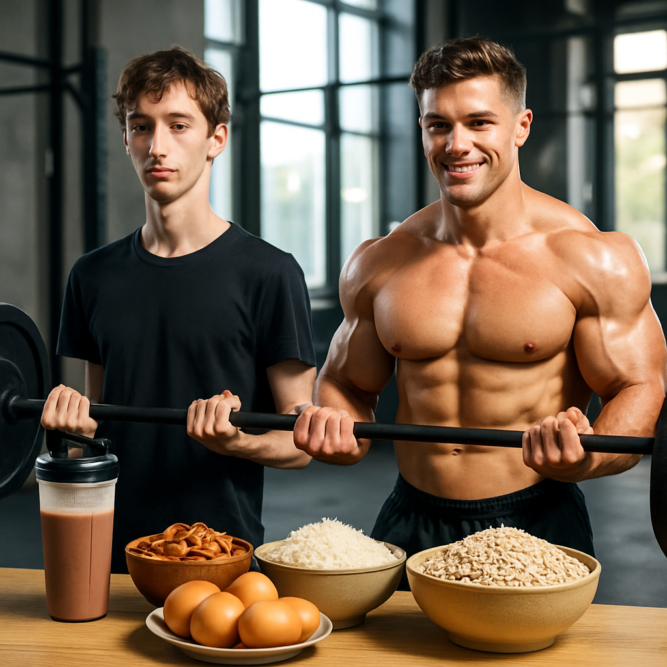
For many naturally lean men, going from a skinny guy to someone with noticeable muscle can feel impossible. Years of hard gym work, random programs, and chugging protein shakes can still leave the scale barely moving. The core message of effective bulking is much simpler than most people realize: if a skinny guy wants to bulk up fast and build muscle, the priorities are eating more than the body burns, following consistent strength training, and allowing enough recovery to grow.
Most “hardgainers” are not truly unable to gain weight; they are unknowingly under-eating. It is common to train five or six days per week, drink a few shakes, and still stay skinny because total daily calories never rise high enough. The body burns thousands of calories per day just existing, and even more with lifting, fidgeting, and walking. If bodyweight is not increasing over weeks, the simple truth is that the current bulking diet is not providing enough calories to support muscle growth.
A strategic approach starts with calculating maintenance calories, often called total daily energy expenditure. Once that baseline is known, a skinny guy trying to bulk up should deliberately eat above it. A reasonable target is to gain about 0.25–0.5% of bodyweight per week, which might mean adding roughly 200–400 calories per day for many people. Tracking food intake for a few days with an app is eye-opening and usually reveals that “eating a lot” is still below what bulking actually requires. After two or three weeks, bodyweight and progress photos guide whether to add more calories.
Muscle growth is also slower than many marketing claims suggest. While dramatic scale jumps can happen when someone suddenly eats a lot more and starts creatine, much of that fast change is a mix of water, glycogen, and some fat. Under realistic conditions, gaining roughly 2 pounds (about 1 kilogram) of lean mass per month is a solid rate for a natural lifter. A smarter, sustainable plan is to gain about half to one and a half pounds per week for months, rather than chasing extreme promises like “40 pounds of muscle in eight weeks.”
Within that calorie surplus, what those calories are made of matters. Protein is the top priority because it repairs and builds muscle tissue that training breaks down. A good rule of thumb for building muscle is about 0.8 to 1 gram of protein per pound of bodyweight per day, with plant-based eaters often benefitting from the higher end. Protein can come from meat, poultry, fish, eggs, dairy, and plant sources such as beans, lentils, tofu, and tempeh. Hitting that daily protein target is one of the most important foundations of any bulking diet for skinny guys.
Carbohydrates come next. Carbs refill muscle glycogen, which fuels hard workouts and helps prevent the body from breaking down muscle for energy. For bulking up, prioritizing foods like rice, oats, potatoes, sweet potatoes, whole-grain pasta, bread, legumes, and fruit can make reaching higher calorie intakes much easier. These carb sources are especially helpful around training sessions, when the body is primed to use them to support performance and recovery. Learning rough portion sizes by eye makes it easier to adjust intake without obsessive weighing.
Dietary fat is also essential and very useful for anyone struggling to gain weight. Fat is calorie-dense, so small portions add up quickly without creating an uncomfortably full feeling. Healthy fat sources like olive oil, avocado, nuts, seeds, and nut butters can easily boost meals and shakes. Saturated fat from foods like full-fat dairy, coconut oil, and fatty cuts of meat can fit into a bulking plan in moderation. Because fat is so energy-dense, simply adding a handful of nuts or a spoonful of oil to meals can push a skinny guy’s bulking calories into the right range.
Alongside protein, carbs, and fats, vegetables and fruits remain important in a muscle-building diet. Eating more total food means digestion and “indoor plumbing” work harder, so fiber-rich foods help keep everything moving smoothly. Vegetables such as broccoli, spinach, kale, zucchini, carrots, and salads, along with a mix of fruits, provide vitamins, minerals, and fiber that support health while bulking up. The goal is not to fill the entire plate with low-calorie vegetables, but to include a fist-sized portion or more at most meals for balance.
Supplements play a much smaller role than many advertisements suggest. Most products are unnecessary, but two can genuinely support a skinny guy trying to build muscle and gain weight: protein powder and creatine. Protein powder is simply a convenient way to hit daily protein targets, especially when appetite is low. Creatine helps muscles store more energy and water, often leading to better training performance and a small, beneficial jump in bodyweight. Beyond these, money is often better spent on real food that supports a consistent bulking diet.
Because appetite is often the limiting factor when bulking up as a skinny guy, liquid calories become a powerful tool. Smoothies and shakes can pack in hundreds of calories with protein powder, oats, frozen fruit, spinach, yogurt, milk, and even added fats like nut butter or a splash of olive oil. These are easier to drink than eating yet another large meal. Another strategy is to keep protein at the optimal range rather than overshooting, using the remaining calories for carbs and fats, since protein tends to be the most filling macronutrient.
Nutrition alone will not build muscle without the right kind of training stimulus. To bulk up effectively, the focus should be on strength training built around progressive overload. That means regularly challenging the body with heavier weights, more total sets, or more repetitions over time so muscles have a reason to grow. For most people, working each major muscle group with about 10–20 hard sets per week, using rep ranges roughly between 6 and 15 per set, and coming within one to three reps of failure, provides a strong base for muscle growth.
A simple, proven structure for skinny guys to build muscle is a three-day-per-week full-body routine. Each session can center on big compound movements like squats, deadlifts, bench presses, overhead presses, rows, pull-ups, and dips, with some smaller isolation work added at the end. Any strength program can work if it allows consistent progression in weight or reps. The key is not to obsess over perfect sets and reps, but to choose a plan, track the numbers, and gradually do more while the bulking diet supports that extra work.
Bodyweight training can also be used to bulk up, even without access to a gym. Exercises like push-ups, pull-ups, inverted rows, lunges, dips, and single-leg squats can be made harder over time by changing leverage, adding reps, or wearing a backpack for resistance. The rule is the same as with weights: muscles must be pushed close to failure in a challenging rep range for growth. It can be slightly trickier to progress systematically with only bodyweight, but it remains a valid path for building muscle as a skinny guy.
Recovery completes the muscle-building equation. Strength training creates the stimulus, eating enough provides the building materials, and rest is when the actual growth happens. Most muscle groups benefit from at least one day off between hard sessions. Excessive long-distance cardio can interfere with bulking up fast by burning a large number of calories and sending the body a different adaptation signal, so keeping cardio shorter, easier, or interval-based tends to work better while in a bulking phase. Sleep is also critical; aiming for plentiful, high-quality rest helps strength, hormones, and recovery stay on track.
A few common concerns often come up for skinny guys trying to bulk up. Worrying about getting “too bulky” is usually unnecessary, because adding significant muscle takes years of consistent effort, especially for naturally thin men. If body fat creeps up faster than desired, calories can simply be trimmed back slightly. Vegetarians and vegans can bulk successfully by prioritizing higher protein intakes and using plant-based protein powders and legumes strategically. And meal frequency is flexible: total daily calories and protein matter more than whether food is eaten in three meals or six, though more frequent meals can make it easier to eat enough.
For anyone starting out skinny and wanting to build muscle, the most reliable path combines a calorie-surplus bulking diet, heavy strength training, and deliberate rest. Track bodyweight trends, gym performance, and progress photos every few weeks. If strength is increasing and bodyweight is creeping up, the plan is working. If the scale has not moved after several weeks, it is time to add more calories. By consistently eating more, lifting heavier, and prioritizing recovery, even the skinniest guy can bulk up, gain weight, and transform into a stronger, more muscular version of himself.



Leave a Reply