


Is Being Underweight a Health Concern?
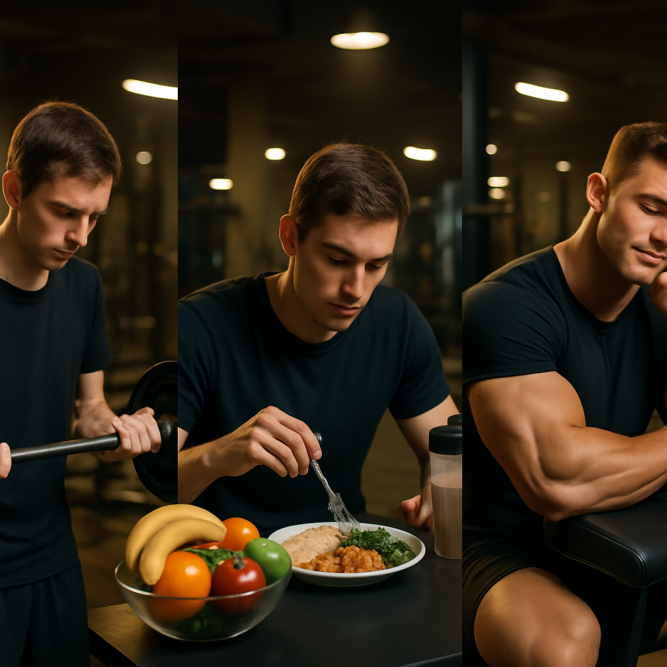
Going from a skinny guy to someone who looks and feels strong is less about secret hacks and more about consistently doing a few key things right. Bulking up fast is possible, but it happens when smart nutrition, structured strength training, and proper recovery all work together. The main idea is simple: give your body a reason to build muscle by lifting, then give it the raw materials and rest it needs so that muscle growth can actually happen.
The biggest mistake most skinny guys make when trying to bulk up is underestimating how much food they actually eat. It is very common to train hard, drink a couple of protein shakes, and still see almost no change in the mirror or on the scale. When that happens, the problem is almost always calories. The body burns a surprising amount of energy just staying alive, and intense lifting or extra cardio raises that demand even more. If body weight is not going up over time, the number one reason is that total calorie intake is not high enough to support muscle growth.
A structured way to fix this is to start by estimating total daily energy expenditure – roughly how many calories the body burns each day based on age, size, and activity level. Once that baseline is clear, the goal is to eat more than that number so the body has a consistent surplus of energy. A realistic target is to gain about 0.25–0.5% of body weight per week, which works out to roughly 0.3–0.75 pounds per week for someone at 150 pounds. Each pound of body mass is about 3,500 calories, so adding roughly 200–400 calories per day above maintenance is a sensible starting point. After two to three weeks, progress should be checked; if the scale and progress photos barely change, another 250 calories per day can be added and the process repeated.
Calorie tracking for a few days is extremely useful at the beginning of a bulk, even for those who do not plan to track long term. Logging everything eaten often reveals that intake is hundreds of calories lower than expected. Once portion sizes and habits are better understood, eating enough to bulk up becomes a lot more straightforward. There will almost always be some fat gain along with muscle when bulking, but that is not a failure; it is simply part of being in a sustained calorie surplus, and small adjustments later can lean things out again.
Within that calorie surplus, protein is the priority for building muscle. Protein provides the building blocks the body needs to repair and grow muscle tissue after hard training. A practical target for most people who want to bulk up is around 0.8 grams of protein per pound of body weight per day, and up to 1 gram per pound for those who prefer a simple rule or follow a plant-based diet. That protein can come from meat, fish, eggs, dairy, legumes, and well-planned vegetarian or vegan sources. Because protein is very filling, more is not always better during a bulk; once muscle protein synthesis is maximized, extra grams just make meals more filling without boosting gains.
After protein needs are met, most of the remaining calories should come from carbohydrates and fats. Carbs are especially useful when trying to bulk up as a skinny guy because they top off muscle glycogen, support performance in the gym, and help the body avoid breaking down protein for energy. Foods like rice, oats, potatoes, whole-grain pasta, bread, fruit, and legumes are all excellent options. Fats are extremely calorie-dense, which makes them valuable for those who feel full quickly and struggle to eat enough. Nuts, nut butters, avocado, olive oil, full-fat dairy, and fatty cuts of meat can easily add hundreds of calories to a day without adding much food volume.
Liquid calories are one of the most effective tools for bulking up fast without feeling stuffed all the time. Smoothies and shakes built around milk or water, protein powder, oats, fruit, and nut butter can deliver a large amount of calories, protein, and carbs in a form that is easy to drink. Simply swapping some water for whole milk or adding a spoonful of olive oil or nut butter can significantly increase the calorie content. For many naturally skinny guys, one or two high-calorie shakes per day are the difference between spinning wheels and finally seeing the scale move.
Supplements are often overhyped in the context of bulking, but a couple of them can genuinely help. A basic protein powder is a convenient way to hit protein targets without chewing through endless extra meals. Creatine is another well-studied supplement that increases the muscles’ ability to store energy and water, boosts power output, and indirectly supports muscle growth by allowing harder training. Beyond these, most “mass gain” products and exotic formulas are unnecessary if nutrition, training, and recovery are on point.
On the training side, the core principle that drives muscle growth is progressive overload. Muscles grow when they are exposed to a challenge they are not yet comfortable with, recover from that stress, and then come back stronger. To bulk up quickly, the focus should be on getting stronger over time in big compound movements that train multiple muscle groups at once. Squats, deadlifts, presses, rows, pull-ups, and dips are classic examples. Most people do well with 10–20 hard sets per muscle group per week, working in a rep range of roughly 6–15 reps per set and coming within one to three reps of failure.
Training each major muscle group at least twice per week tends to produce better muscle growth than only hitting it once. Full-body workouts done two to four times per week work very well for beginners and busy people, because they provide enough frequency and volume without demanding a six-day schedule. As strength increases, more specialized upper/lower or push/pull/lower splits can be used, but they are not required for a skinny guy to bulk up effectively. What matters most is consistently adding weight to the bar, performing more total reps, or progressing to harder variations.
Bodyweight training can absolutely support bulking up if progressive overload is applied intelligently. Movements like push-ups, pull-ups, rows, lunges, and single-leg squats can all be made harder over time by changing angles, adding pauses, increasing reps, or eventually adding external load. The key is the same as with weights: the exercise has to be challenging enough that sets end close to muscular failure. For those who train at home or prefer calisthenics, systematically progressing bodyweight variations can still build impressive muscle size and strength when combined with a calorie surplus.
Many people who describe themselves as “skinny fat” face a special challenge: they feel small in their arms and legs but also carry extra fat around the midsection. In this situation, trying to build muscle and lose fat at the same time can be a smart starting strategy. Heavy strength training combined with a slight calorie deficit and sufficient protein can slowly recomposition the body, reducing body fat percentage while adding lean mass. Once a leaner baseline is reached – roughly the mid-teens in body fat for men and mid-twenties for women – a controlled bulk focused on building muscle becomes easier to manage without feeling overly soft.
Recovery is the third pillar of successful bulking that skinny guys often overlook. Muscles grow between workouts, not during them, so rest days are not a sign of laziness but a requirement for growth. Most muscle groups benefit from around 48 hours of recovery before another heavy session. Sleep is just as critical; building muscle places extra demands on the body, and seven to nine hours of quality sleep per night helps hormones, performance, and muscle repair stay in a good place. Long-distance cardio, while excellent for endurance, can interfere with bulking if it makes it impossible to eat enough or if it shifts the body’s adaptation toward efficiency rather than size. Light walking, short bouts of low-intensity cardio, or occasional intervals are usually enough to support health without sabotaging gains.
A few persistent worries hold many skinny guys back from bulking effectively. Fear of getting “too bulky” is one of them, but in reality it takes years of focused eating and training to gain that much size, especially for naturally thin people. Another misconception is that meals must be eaten every three hours to build muscle. In practice, total daily calories and protein are far more important than meal timing. Some people find that more frequent meals make it easier to eat enough, while others do better with larger, less frequent meals or added shakes.
The overall formula for a skinny guy to bulk up fast is straightforward, even if it requires discipline. Eat in a consistent calorie surplus with enough protein, carbohydrates, and fats to support muscle growth. Train with progressive overload, emphasizing big, compound movements that get stronger over time. Limit excessive endurance work, prioritize sleep and rest, and give the body the chance to repair and grow. With those fundamentals in place and adjusted week by week based on real progress, even someone who has always struggled to gain weight can gradually build a bigger, stronger, more muscular physique.






Leave a Reply