


How to Gain Weight With a Fast Metabolism
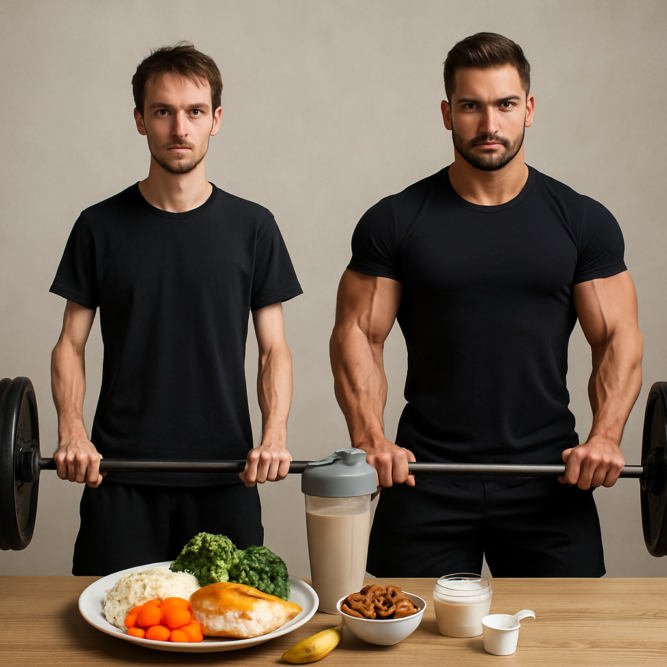
Bulking up fast is not about living in the gym or chasing miracle supplements. The core lesson of this skinny guy’s guide to bulking is simple: if you want to build muscle, you must eat enough food, train with progressive overload, and recover well enough for your body to grow. The article argues that many people who struggle to gain size are not failing because of bad genetics alone, but because they underestimate how much they need to eat and how much consistency matters.
The author frames the advice through his own long history as a naturally skinny person who spent years lifting, drinking protein shakes, and following muscle-building advice without seeing much progress. His turning point came when a trainer simplified his workouts and doubled his food intake, leading to rapid weight gain and strength improvements. That experience reshaped the entire approach: muscle gain is not mainly a question of doing more random exercise, but of matching training with a calorie surplus and steady progression.
At the center of the bulking strategy is eating more calories than the body burns. The article emphasizes that muscle is built in the kitchen as much as in the gym, and that many people who think they eat enough are actually under-eating. It recommends first estimating total daily energy expenditure, or TDEE, then adding calories slowly enough to gain roughly 0.25 to 0.5 percent of body weight per week. This slower pace is presented as more sustainable than aggressive overeating, because the body can only build so much muscle naturally each week, and extra calories beyond that limit are stored as fat, glycogen, and water.
For anyone starting a bulk, the article suggests tracking food intake for a few days to get a realistic picture of current eating habits. That step matters because people often misjudge portion sizes and calorie totals. Once maintenance calories are known, the next step is to add around 200 to 400 calories per day for a 150-pound person, then reassess after two or three weeks. If weight is not increasing, the solution is to add another 250 calories per day and repeat the process until the scale and progress photos start moving in the right direction.
The nutrition advice breaks bulking food into four priorities: protein, carbohydrates, fats, and vegetables. Protein is presented as the foundation for muscle repair, with a target of about 0.8 to 1.0 grams per pound of body weight per day. The article notes that plant-based eaters may need to aim toward the higher end of that range. Good protein sources include meat, poultry, fish, eggs, dairy, legumes, and other vegetarian options. Carbohydrates come next because they refill muscle glycogen and help prevent the body from breaking down protein for energy. Foods like rice, oats, potatoes, pasta, quinoa, and beans are highlighted as practical bulking staples.
Dietary fat is treated as a useful tool for people who struggle to eat enough. Because fat is calorie-dense, small portions can raise daily intake without causing extreme fullness. The article points to foods like avocado, nuts, nut butters, olive oil, and fatty cuts of meat as easy ways to add calories. It also explains that saturated fat can fit into a bulking diet in moderation. Vegetables still matter, not because they directly drive muscle gain, but because they provide fiber and micronutrients that support digestion and overall health while the calorie intake rises.
The supplement section is deliberately skeptical. Most supplements are described as unnecessary, but two are recommended: protein powder and creatine. Protein powder is useful because it makes it easier to hit daily protein and calorie targets without eating huge amounts of solid food. Creatine is recommended because it helps muscles retain water and can support better workout performance and muscle growth. Beyond those two, the article argues that most supplement marketing is not worth prioritizing for someone trying to bulk up.
Another major theme is food volume management. To make a calorie surplus easier, the article suggests using liquid calories such as high-calorie smoothies, which can provide large amounts of protein, carbs, and fats without making someone feel overly full. It also recommends keeping protein at the lower end of the effective range when appetite is limited, because protein is especially filling. Eating more palatable foods, increasing meal frequency, and slowly enlarging portions are presented as practical ways to train the appetite over time. The point is not to force huge meals all at once, but to gradually help the body tolerate more food.
Training advice centers on getting stronger. The article explains that muscle grows when it is challenged, broken down, and rebuilt stronger through progressive overload. That means increasing the weight, reps, sets, or difficulty over time. For most people, the article recommends 10 to 20 working sets per muscle group per week, with many lifters doing well in the 6 to 15 rep range. Working sets should usually be close to failure, meaning the athlete stops with only one to three reps left in the tank. The article also recommends controlled lowering phases, regular training of each muscle group at least twice per week, and full-body programs for beginners because they are efficient and effective.
A sample bulking workout is included as a practical model, built around compound lifts such as squats, deadlifts, bench presses, overhead presses, rows, dips, push-ups, and pull-ups. The article stresses that the exact routine matters less than the principle: pick a program, lift consistently, and add difficulty over time. It also notes that bodyweight training can absolutely build muscle, as long as the movements are hard enough and progressed properly. Gymnast-style training, pull-ups, dips, and advanced push-up or squat variations can all support hypertrophy if they create enough tension and are taken close to failure.
The article also addresses the common “skinny fat” problem, where someone is thin in the limbs but carries extra belly fat. In that case, it presents three paths: bulk first, cut first, or try to build muscle and lose fat at the same time. For many people, the recommendation is to use heavy strength training, eat a slight calorie deficit, and consume enough protein to reduce body fat while still building some muscle. Once body fat reaches a more comfortable level, the focus can shift back to gaining size. The article is clear that trying to maximize both goals at once involves tradeoffs, but it can still be a sensible middle path.
Recovery is the final piece of the muscle-building puzzle. The article says muscles grow during rest, not during the workout itself, so sleep and recovery days are essential. It recommends allowing roughly 48 hours before training the same muscle group hard again and warns that too much long-distance cardio can make it harder to eat enough and grow. Light activity, walking, or short interval sessions are fine, but endurance-focused training can slow bulking progress. Sleep is treated as non-negotiable, because bigger training loads and calorie surpluses only work if the body has enough rest to adapt.
The final message is direct: stop overcomplicating bulking. Eat more than you burn, prioritize protein and calorie-dense foods, train hard with a clear plan, and recover enough to keep progressing. For skinny guys trying to bulk up, the path to muscle gain is not mysterious; it is a steady combination of more food, stronger lifts, and consistent recovery.



Leave a Reply