


Healthy Weight Gain Strategies for Athletes
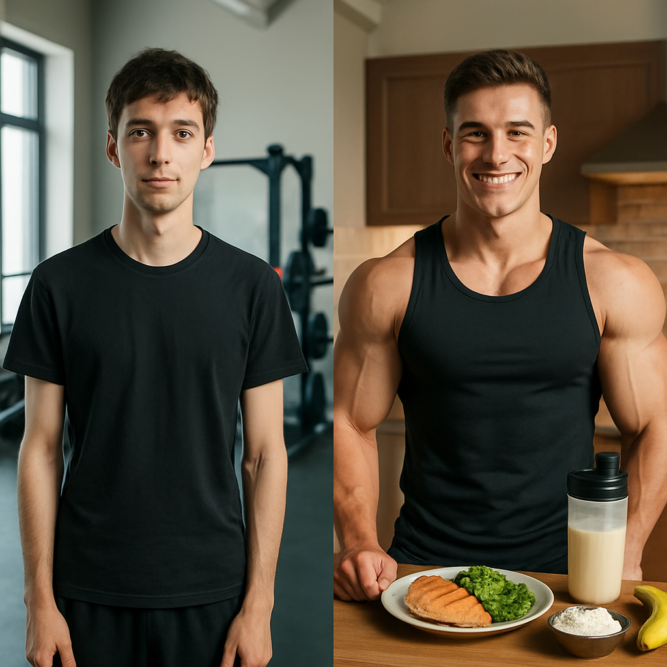
Many naturally thin people spend years in the gym without seeing real size gains and conclude they are “hardgainers” who cannot bulk up. In reality, almost every skinny guy can bulk up fast and build muscle with the right combination of a calorie surplus, smart strength training, and good recovery. The main obstacle is not bad genetics but under-eating and unfocused workouts.
The experience of repeatedly training hard, drinking protein shakes, and barely gaining a few pounds is common. What often unlocks muscle growth is a radical shift in priorities: simplifying the workout plan, focusing on getting stronger, and dramatically increasing food intake. When training and eating are aligned, rapid changes are possible, such as gaining significant weight in a month or adding visible muscle even without regular access to a gym. This shows that a gym can speed up progress, but it is not mandatory for bulking up if the principles are in place.
Nutrition is the foundation of any skinny guy bulking strategy. The body burns a certain number of calories daily just to stay alive and move around, known as total daily energy expenditure. To gain weight and build muscle mass, daily intake needs to exceed this amount consistently. A practical target is to aim to gain about 0.25–0.5% of body weight per week, which often means adding a few hundred extra calories per day. Tracking food intake for a few days with an app reveals that most “hardgainers” eat far less than they think, which is why the scale does not move.
Once maintenance calories are known, a modest surplus is usually enough to bulk up without excessive fat gain. For many people that surplus is in the range of 200–400 extra calories per day to start, depending on size and activity level. After two to three weeks, bodyweight and progress photos should be reviewed. If weight is not increasing, another small bump in calories, often 250 per day, keeps bulking on track. Some fat gain is normal when trying to bulk up fast, but extreme “dirty bulks” that promise 30 or 40 pounds in a couple of months mostly add body fat and water rather than lean muscle.
Macronutrient balance matters within that calorie surplus. Protein is the top priority for building muscle because it provides the raw materials for repair and growth after strength training. A simple guideline is to consume about 0.8 to 1 gram of protein per pound of bodyweight each day, with plant-based eaters leaning toward the higher end to offset less optimal amino acid profiles. Good protein sources include meat, poultry, eggs, fish, dairy, legumes, and protein powders. Structuring each meal around a solid protein portion makes it much easier to hit these targets.
Carbohydrates come next in a bulking diet because they refill muscle glycogen, support training performance, and help prevent the body from breaking down protein for energy. Foods like rice, oats, potatoes, pasta, bread, beans, and fruit are effective ways for skinny guys to add calories and fuel hard workouts. Fats are equally important, particularly for people who struggle to eat enough. Healthy fats from avocado, nuts, seeds, olive oil, and full-fat dairy pack a lot of calories into small portions, which is crucial when appetite is limited. Including plenty of vegetables and some fruit provides fiber and micronutrients that support digestion and overall health while bulking.
Supplements are often overhyped in the quest to bulk up fast, but only a few have strong evidence behind them. Protein powder is essentially a convenient food, not a magic potion, and it can make hitting daily protein and calorie goals significantly easier, especially when blended into shakes with oats, fruit, and nut butters. Creatine is another well-supported supplement that helps muscles store more energy and water, often boosting strength and training performance and indirectly supporting more muscle growth. Beyond these, most products marketed to skinny guys are unnecessary if diet and training are properly structured.
For those who cannot seem to eat enough, certain tactics make a bulking diet more manageable. Liquid calories are especially useful because they are less filling than solid food, allowing more total intake. High-calorie smoothies made with oats, frozen fruit, spinach, protein powder, milk, and added fats like olive oil or nut butter can easily provide hundreds of extra calories. Keeping protein at the lower end of the recommended range can free up room for more carbs and fats if fullness is a problem, since protein is very satiating. Gradually increasing portion sizes and meal frequency trains the stomach to accept more food, just as muscles adapt to heavier loads.
Strength training is the engine that turns those extra calories into muscle rather than just fat. To bulk up effectively, the focus should be on getting stronger using progressive overload, which means steadily increasing the weight lifted, the number of reps performed, or the total number of hard sets over time. The most efficient exercises for building muscle mass are compound lifts that work multiple joints and muscle groups at once, such as squats, deadlifts, presses, rows, pull-ups, and dips. These movements allow heavy loading and stimulate a large amount of muscle tissue.
A practical approach for most skinny guys is to train each major muscle group at least twice per week, often using full-body workouts two to four times weekly. For each exercise, performing two to three challenging sets of about 6–15 reps, stopping one to three reps short of failure, strikes a good balance between strength and size gains. The lowering phase of each lift should be controlled to keep tension on the muscles and reduce injury risk. Details like exact rep ranges matter far less than pushing close to failure, using good technique, and consistently progressing over weeks and months.
Bodyweight training can also be very effective for bulking up when external weights are unavailable. Gymnasts demonstrate how far calisthenics can go for muscle development. The key is still progressive overload: making movements harder as they become easier. This might mean graduating from incline push-ups to standard push-ups, then to decline or weighted push-ups, or progressing from bodyweight squats to single-leg squats. For some muscle groups and home setups, it can be trickier to find challenging variations, which is why many people find barbells and dumbbells more straightforward. Still, a well-planned bodyweight workout can absolutely support a skinny guy’s goal to gain muscle.
Skinny-fat individuals, who have thin limbs but carry extra fat around the midsection, often wonder whether to cut fat or bulk up first. One effective strategy is body recomposition: lifting heavy while eating a slight calorie deficit and keeping protein high. This can slowly build muscle while reducing body fat, steering physique and health in the right direction without large weight swings. Once body fat drops to a more comfortable range, increasing calories turns the focus more fully toward gaining size, with periodic small adjustments if fat gain outpaces muscle.
Recovery is the third pillar of any successful bulking plan. Muscles grow during rest, not during the workout itself, so training the same muscle group hard on back-to-back days is usually counterproductive. Light activity, walks, or gentle mobility work are fine between sessions, but serious strength training should be spaced to allow at least roughly 48 hours of recovery for each area. Long-distance cardio can interfere with bulking up because it increases calorie expenditure and signals the body to adapt for endurance rather than size, so it is wise to limit long runs or rides while in a muscle-building phase. Shorter interval sessions or simply higher daily step counts can maintain cardiovascular health without compromising gains as much.
Sleep is also a crucial but often ignored part of bulking up fast. Deep sleep is when much of the hormonal and cellular repair that underpins muscle growth takes place. Strength training, especially heavy lifts like deadlifts and squats, can increase the body’s demand for sleep, so aiming for longer and higher-quality rest makes a noticeable difference in progress. That may mean trading some late-night screen time for earlier bedtimes to support recovery and growth.
Common concerns often hold skinny guys back unnecessarily. Worrying about getting “too bulky” is unfounded for most, since adding dozens of pounds of quality mass takes years of disciplined eating and lifting. Vegetarians and vegans can definitely bulk up by paying close attention to total protein intake and relying on foods like legumes, soy products, nuts, seeds, and, for vegetarians, dairy. Eating every three hours is optional; what matters most is total daily calories and protein, though smaller, frequent meals can make it easier to reach a high calorie target. Trying to simultaneously maximize endurance, flexibility, and muscle size tends to slow progress in all areas, so prioritizing building muscle and strength first usually delivers better results.
Ultimately, a skinny guy’s guide to bulking up comes down to a simple but demanding formula. Eat more than the body burns, with plenty of protein, carbohydrates, and healthy fats. Follow a structured strength training program that emphasizes progressive overload using compound movements or challenging bodyweight exercises. Protect the gains by sleeping well and allowing adequate recovery. Monitor bodyweight, photos, and performance in the gym, and adjust food intake and training load when progress stalls. With patience and consistency, even lifelong “hardgainers” can bulk up fast, build muscle mass, and finally see the size and strength they have been chasing.



Leave a Reply