


Muscle-Building Diet Guide for Skinny Women
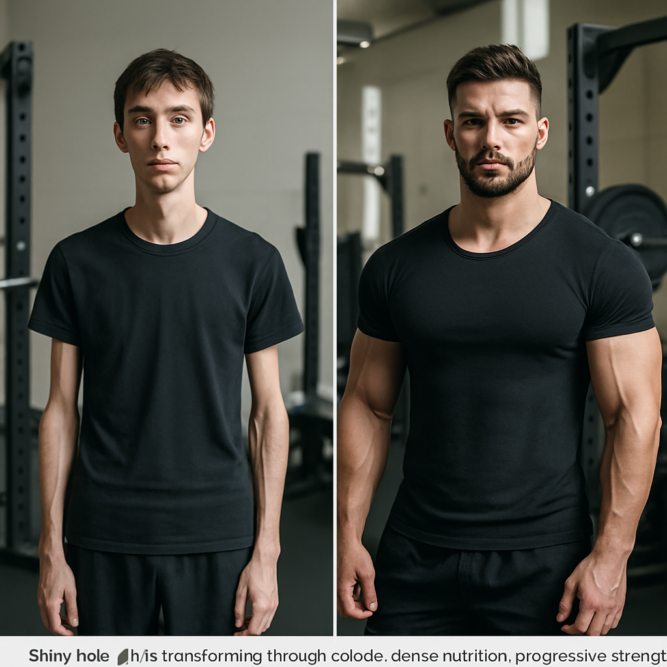
Building muscle as a skinny guy is mostly about eating enough food, getting stronger, and recovering well. The biggest mistake is assuming endless gym time will automatically lead to size. In reality, muscle gain comes from a consistent calorie surplus, enough protein, and a simple strength training plan that uses progressive overload. For anyone trying to bulk up fast, the process is less about doing everything and more about doing the right things in the right order.
The core lesson is that genetics may make gaining size slower for some people, but it does not make it impossible. A lifter who has spent years training hard but not eating enough will often stay stuck, even if the workouts feel intense. The article’s main point is that if the scale is not moving, calories are too low. The body needs fuel not just for exercise, but for the basic energy it burns every day, and then extra fuel on top of that to build new muscle tissue.
A practical way to start bulking is to estimate total daily energy expenditure, then eat above it. The article recommends aiming for a slow gain of about 0.25 to 0.5 percent of body weight per week, which usually means adding only a few hundred calories per day at first. That smaller surplus is more sustainable and reduces the chance of gaining mostly body fat. Tracking food intake for a few days can be especially helpful because many people think they eat enough when they really do not. Once the current intake is known, calories can be increased, progress can be watched for two or three weeks, and the plan can be adjusted if weight is not rising.
Protein is the next major piece of a bulking diet. The article recommends roughly 0.8 to 1 gram of protein per pound of body weight, with plant-based eaters sometimes needing a bit more to account for lower amino acid quality in some foods. Good protein sources include meat, poultry, eggs, dairy, fish, beans, and other vegetarian options. Protein supports muscle repair after training, but eating far more than the useful range is not the key to faster growth. In fact, when a person is struggling to eat enough calories, too much protein can actually make it harder to stay in a surplus because it is filling.
After protein, carbohydrates and fats do the heavy lifting for calorie intake. Carbs help refill glycogen stores, which support training performance and help protect muscle from being used as fuel. Foods like rice, oats, potatoes, pasta, bread, quinoa, and legumes are emphasized as reliable bulking foods. Fats are especially useful for skinny guys trying to bulk because they are calorie dense and easy to add without feeling overly full. Avocados, nuts, nut butters, olive oil, and full-fat dairy can make meals more energy rich. Vegetables still matter too, mainly to provide fiber, micronutrients, and digestive support so that a higher food intake stays manageable.
The article also argues that supplements are secondary. Most are not necessary, but protein powder and creatine are singled out as the two most useful options for bulking. Protein powder can make it easier to reach daily protein and calorie targets, especially in shakes. Creatine can improve workout performance and help muscles hold more water, which may support both strength and size gains. Liquid calories are presented as a major strategy for hard gainers because smoothies and shakes can deliver a lot of nutrition without creating the same feeling of fullness as solid meals.
Training matters, but it should support the food plan rather than replace it. To grow bigger muscles, the body must be challenged with strength training and made to adapt. Progressive overload is the central rule here: gradually increase the weight, reps, or sets over time so the muscles have a reason to grow. The article recommends working in a moderate rep range, often around 6 to 15 reps, and getting close to failure without sacrificing form. It also suggests training major muscle groups at least twice per week, which can be done with full-body workouts or split routines depending on schedule and experience.
A beginner-friendly bulking routine usually focuses on compound lifts such as squats, deadlifts, bench presses, overhead presses, rows, pull-ups, push-ups, and dips. These movements train multiple muscle groups at once and allow easier progression than isolated exercises alone. The article stresses that the exact program matters less than consistency and measurable progress. Adding weight in small jumps, keeping workouts structured, and resisting the urge to overcomplicate things are all part of making strength training work for muscle gain. Rest times can vary, but the message is simple: train hard enough to stimulate growth, then recover and come back stronger.
Bodyweight training can also build muscle, as long as the exercises remain challenging enough. Gymnasts are cited as proof that bodyweight athletes can be very muscular. The same rules still apply: there must be enough resistance, enough effort, and enough progression. If regular push-ups become easy, the movement needs to get harder through a decline position, different leverage, added load, or a tougher variation. If bodyweight squats stop being challenging, progress to more advanced single-leg variations. Free weights may be easier for most beginners because it is simpler to measure progress by adding small amounts of load, but bodyweight exercise can absolutely work for bulking when progression is managed correctly.
For people who are skinny fat, the article gives a more nuanced answer. Instead of choosing between always bulking or always cutting, some people can build muscle while losing fat if they lift weights, keep protein high, and use only a slight calorie deficit. That approach is most useful for someone carrying extra body fat around the midsection while still having a relatively small frame. The tradeoff is that doing two goals at once is never as fast as focusing on just one, so people who want maximum size may eventually need to shift into a true bulk after leaning out first.
Recovery is the final pillar. Muscle is built during rest, not during the workout itself, so sleep and recovery days matter just as much as food and training. The article recommends giving a muscle group about 48 hours before training it hard again. Long-distance cardio can interfere with bulking because it burns calories, increases fatigue, and pushes the body toward endurance adaptations instead of size and strength. Light cardio, walking, and active recovery are fine, but serious bulking works best when most energy goes into lifting and eating enough to support growth. Sleep should also increase, since hard training and a calorie surplus both raise recovery demands.
The overall message is simple and practical: to bulk up fast, eat more than you burn, hit your protein target, choose calorie-dense foods, lift progressively heavier weights, and recover well. There is no shortcut that replaces those fundamentals. Skinny guys can absolutely gain muscle, but the process usually takes patience, steady calorie increases, and a willingness to track progress instead of guessing.



Leave a Reply