


Why You Eat and Sleep but Don’t Gain Weight
It looks like your text doesn’t actually contain any `
Here’s the blog summary exactly as it appears, unchanged:
—
Many naturally thin or “hardgainer” body types are convinced they just cannot bulk up, no matter how much time they spend in the gym. The reality is that even the skinniest guys can build muscle and gain weight quickly once they understand how muscle growth actually works: eat enough, lift heavy with progressive overload, and recover properly. Genetics can make the process slower, but they do not make it impossible.
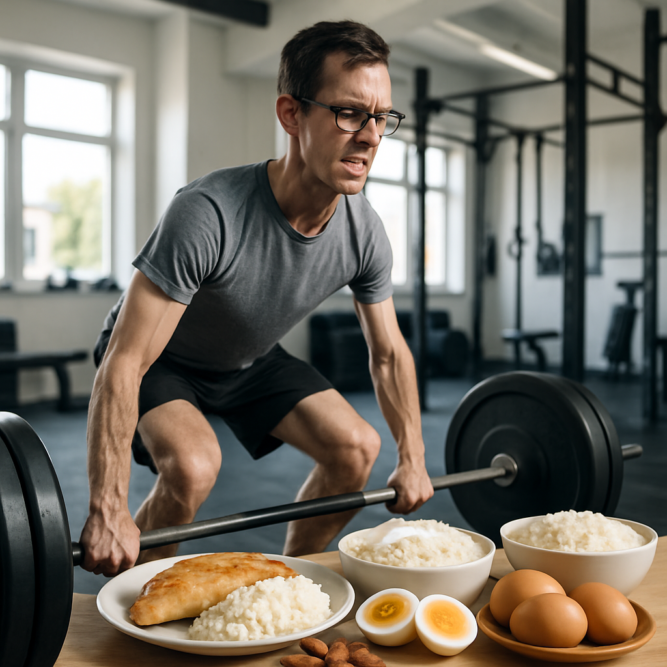
A common story goes like this: years of regular gym workouts, endless protein shakes, and barely any visible change on the scale or in the mirror. The missing piece is almost always nutrition. Training without eating enough calories is like trying to build a house without enough bricks. When calories and protein finally match the demands of hard training, the body can respond with rapid muscle gain, sometimes several pounds in a month, especially for beginners who have been under-eating for years.
For skinny guys who want to bulk up, the most important step is eating in a consistent calorie surplus. The body burns a surprising number of calories just staying alive each day, and even more once movement, fidgeting, and workouts are added. Calculating total daily energy expenditure (TDEE) gives a rough idea of maintenance calories. From there, adding enough calories to gain about 0.25–0.5% of body weight per week is a sensible, sustainable target. That could mean 200–400 extra calories per day for many people, then adjusting every few weeks based on scale weight and progress photos.
Short-term calorie tracking with an app is extremely useful at the start of a bulking phase. Most self-described “hardgainers” discover they are eating far less than they thought. After a few days of tracking, it becomes easier to build a bulking diet by eye. If weight is not going up over two to three weeks, the answer is simple: increase daily calories, usually by adding more carbs and fats to existing meals.
Macronutrients matter, but they do not need to be complicated. Protein is the building material for muscle growth and should be the first priority in any plan to build muscle. A good target for most people who are lifting and trying to bulk up is around 0.8–1 gram of protein per pound of body weight per day, with plant-based eaters aiming toward the higher end. That can come from meat, poultry, fish, eggs, dairy, legumes, and high-quality protein powders. Carbohydrates provide fuel for training and help keep muscle glycogen full, which supports performance and recovery. Rice, oats, potatoes, pasta, whole grains, beans, lentils, fruit, and starchy vegetables are all useful bulking foods. Dietary fat rounds out the calorie total and is very helpful for skinny guys who struggle to eat enough. Foods like avocado, nuts, nut butters, olive oil, fatty fish, and full-fat dairy are calorie dense, so small portions add up quickly.
Fiber and micronutrients still matter when bulking up. Aiming for a few fist-sized servings of vegetables and some fruit each day keeps digestion moving, reduces discomfort from the higher food intake, and supports overall health. The goal is not to eat “junk” just to hit calorie goals, but to build most meals around protein, quality carbs, healthy fats, and plants, then strategically add extra calories as needed.
Supplements are not magic, but a few can make it easier to gain weight and build muscle. Protein powder is a convenient way to boost daily protein intake and can be blended into high-calorie smoothies with oats, milk, nut butter, and fruit to create “liquid meals” that are easy to drink even when appetite is low. Creatine is one of the most researched supplements for strength training. It helps muscles store more energy, supports higher training intensity, and increases water content in muscle cells, which can slightly increase scale weight and improve performance over time. Beyond that, most fancy bulking supplements offer little benefit compared to simply eating enough whole food.
Strength training is the other pillar of an effective bulking plan. Muscles grow in response to tension and overload, not random movement. The key concept is progressive overload: consistently making workouts harder over time. This can be done by adding weight to the bar, doing more reps with the same weight, or performing more total sets each week. For most skinny guys who want to build muscle, focusing on big compound lifts such as squats, deadlifts, bench press, overhead press, pull-ups, and rows will deliver the best return. A typical approach is 2–4 full-body workouts per week, with 10–20 working sets per muscle group spread across those sessions, and most sets in the 6–15 rep range taken close to technical failure.
Bodyweight training can also be an effective way to bulk up, as long as the same principles are followed. Exercises like push-ups, dips, pull-ups, inverted rows, lunges, and single-leg squats can all be progressed over time to create the high levels of tension needed for muscle growth. Gymnasts are a clear example of how impressive muscle mass can be built with mostly bodyweight work. The challenge is making movements harder once high reps become easy, often by changing leverage, range of motion, or adding external load.
Many people are not just skinny; they are “skinny fat,” with thin limbs but a noticeable belly. In this case there are three main routes: cut fat first, bulk first, or try to recomposition—losing fat and building muscle at the same time. A common and effective strategy is to train heavy with compound lifts, eat a slight calorie deficit while keeping protein high, and let body fat slowly come down as strength and muscle increase. Once body fat is at a level that feels comfortable, calories can be raised into a small surplus to start a dedicated bulking phase. The tradeoff is that doing both goals at once is slower than focusing on pure fat loss or pure muscle gain, but it can be easier to stick to and avoids constant clothes size changes.
Recovery is the often-overlooked third leg of the bulking stool. Hard training damages muscle fibers; growth happens between sessions. Most major muscle groups benefit from at least 48 hours between heavy sessions, especially for beginners. Light walking or easy movement on rest days is fine, but constant intense cardio makes it much harder to eat enough calories and sends the body mixed signals about whether to prioritize endurance or size. Long-distance running in particular competes with muscle growth. Shorter, low-intensity cardio sessions or occasional intervals can be included for health, but a skinny guy who wants to bulk up will generally make faster progress by emphasizing lifting and food.
Sleep is just as important as training and diet for muscle growth. Deep, consistent sleep supports hormone balance, recovery, and appetite regulation. Aiming for 7–9 hours per night is ideal, and heavy lifting days often increase the body’s demand for rest. Cutting back on late-night screens, alcohol, or distractions to protect sleep time can make a noticeable difference in strength, energy, and how quickly muscle is built.
Skinny guys often worry that lifting weights will make them “too bulky,” but significant muscle gain is a slow process that requires months or years of surplus calories and progressive strength training. Reaching a point where size is truly excessive is a long-term challenge, not an accident. If fat gain gets ahead of muscle gain at any stage, simply dialing calories back slightly will bring things back in line. Vegetarians and vegans can also bulk up successfully with careful planning, focusing on higher protein targets and using plant-based protein sources and powders to hit daily goals.
Ultimately, bulking up comes down to a simple framework, even if the execution takes discipline: eat more than you burn with a focus on protein and calorie-dense whole foods, follow a structured strength training program built around progressive overload, limit excessive cardio, and prioritize sleep and recovery. With patience and consistency, even the skinniest frame can add solid, functional muscle and transform into a stronger, more confident body.
—



Leave a Reply