


Women’s Guide to Building Muscle
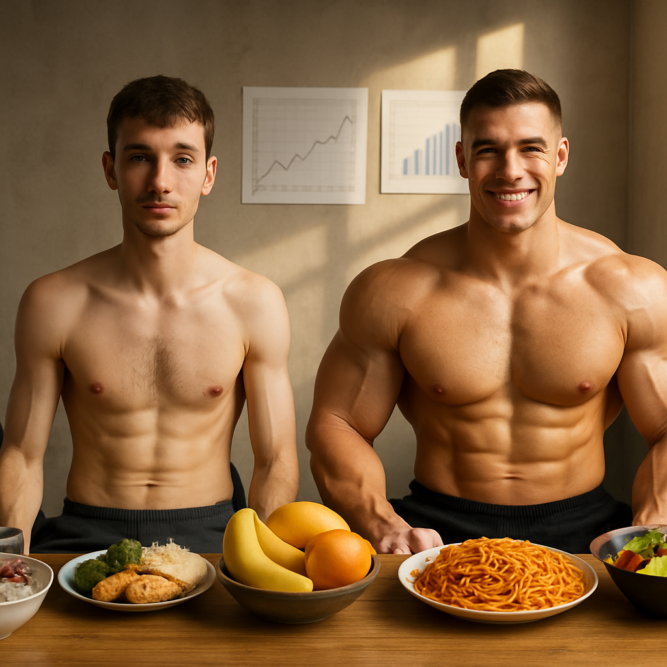
Many skinny guys trying to bulk up fast assume they are “hard gainers” who simply can’t build muscle, but the real issue is almost always too little food combined with unfocused training. This guide shows that even naturally slim people can gain weight and build muscle quickly by eating in a consistent calorie surplus, prioritizing protein, following progressive strength training, and respecting recovery.
The article begins with the story of someone who spent years lifting weights, reading muscle magazines, and downing protein shakes, yet only gained a few pounds of muscle. Progress stayed minimal until a trainer simplified the workouts and dramatically increased food intake. With more structured strength training and roughly double the calories, the author gained about 18 pounds in 30 days, with big jumps in strength and confidence. That transformation led to a new understanding: muscle is built primarily through smart nutrition and progressive overload, not endless gym hours or exotic routines.
The central message is that muscle isn’t made in the gym but in the kitchen. For a skinny guy, bulking up fast requires eating more calories than the body burns each day. The guide explains that everyone has a daily energy expenditure based on age, height, weight, activity level, and genetics. If weight is not increasing over time, the current intake is below this maintenance threshold. Tracking food for a few days reveals how many calories are actually being consumed, which often turns out to be far less than assumed. Once that baseline is known, the solution is to consistently eat above it until the scale and progress photos show tangible weight gain.
Instead of chasing massive, rapid changes that are mostly water and fat, the recommendation is to aim to gain about 0.25–0.5% of body weight per week. For a 150‑pound skinny guy, that’s roughly 0.3–0.75 pounds weekly, which typically translates to an extra 200–400 calories per day above maintenance. After two or three weeks at this surplus, progress is reassessed and calories are adjusted upward if weight is still stagnant. The guide emphasizes that natural muscle growth has limits: aggressive bulking can easily overshoot what the body can turn into lean mass, leading to extra fat. Realistic expectations might be one pound of muscle per month for many people, with some fat gain as a normal part of bulking up.
To support this steady weight gain, the article breaks nutrition down into priorities: protein, carbohydrates, fats, and vegetables. Protein is highlighted as the foundation for building muscle, as it repairs and rebuilds tissue after hard training. For most healthy, active people trying to build muscle, a target of around 0.8–1 gram of protein per pound of body weight is recommended, with plant‑based eaters leaning toward the higher end. Typical sources include meat, poultry, fish, eggs, dairy, legumes, and plant protein blends. Learning portion sizes helps a skinny guy hit these numbers consistently, such as recognizing that four ounces of chicken or steak provides around 25–30 grams of protein.
Carbohydrates come next, because they refill muscle glycogen stores and provide energy for hard strength training and daily activity. The guide suggests carb‑dense foods like rice, oats, quinoa, lentils, potatoes, sweet potatoes, and whole‑grain bread or pasta. Visual cues such as a cupped hand for uncooked grains help estimate portions. Fruit and starchy tubers round out carbohydrate choices, making it easier to reach the calorie surplus needed for bulking up fast without relying on junk food.
Fats are framed as a powerful tool for skinny guys who struggle to eat enough. Since fat is calorie‑dense, small portions of nuts, nut butters, avocado, seeds, olive oil, and other oils can add hundreds of calories without large increases in food volume. Saturated fats from full‑fat dairy, coconut oil, butter, and fatty meats can be included in moderation, keeping them to a fraction of total fat intake. Using a thumb‑sized portion as a rough guide helps avoid overdoing it while still benefiting from the extra energy fats provide.
Vegetables and fruit are not ignored in this bulking strategy. As food intake climbs, digestion and overall health depend on adequate fiber and micronutrients. A fist‑sized portion of vegetables with meals keeps “indoor plumbing” functioning smoothly and helps balance out the higher calorie, higher protein diet needed for muscle growth. A varied mix of leafy greens, cruciferous vegetables, and colorful produce meets these needs without crowding out key bulking foods.
Supplements play a small but targeted role. Most products marketed to skinny guys trying to bulk up are dismissed as unnecessary, yet two supplements are recommended as genuinely helpful. A quality protein powder makes it easier to hit daily protein targets and can be blended into high‑calorie shakes. Creatine is described as one of the most researched performance aids, increasing strength, power, and cellular hydration, which supports heavier lifting and muscle growth. Beyond these, the emphasis stays firmly on whole‑food nutrition.
The guide offers practical strategies to help skinny guys consume the extra calories required. Liquid calories are framed as a secret weapon, because shakes are less filling than large solid meals. A typical high‑calorie shake might include water or milk, oats, frozen fruit, spinach, and protein powder, possibly boosted with oils or nut butter. Another tactic is keeping protein near the lower end of the recommended range when appetite is limited, freeing more room for carbs and fats. Highly palatable foods that combine flavors, fats, and carbohydrates can make eating more enjoyable and less of a chore. Gradually increasing portion sizes and adding extra meals over time trains the stomach to accept more food, much like muscles adapt to heavier weights.
On the training side, the article stresses that if a skinny guy wants to bulk up fast, the priority is getting stronger through structured strength training. Muscle fibers are broken down during lifting and rebuilt thicker and stronger during recovery. Progressive overload—consistently adding weight, reps, or sets—is described as the critical driver of muscle growth. A good starting point is 10–20 challenging sets per muscle group per week, performed in a moderate rep range around 6–15, with each working set taken close to technical failure. Controlling the lowering phase of each lift for two to four seconds increases tension and safety.
Training schedules should hit each major muscle group at least twice per week. For most beginners and skinny guys, full‑body workouts two to four days weekly are recommended as the most efficient way to build muscle. The guide highlights compound lifts such as squats, deadlifts, bench presses, overhead presses, rows, pull‑ups, dips, and push‑ups as the backbone of any bulking program. These movements recruit multiple muscle groups at once, delivering more growth stimulus per set than isolation work. Any well‑designed plan that emphasizes these lifts, logs progress, and steadily increases the challenge will work if combined with sufficient food and sleep.
Bodyweight training is presented as a viable alternative or complement to weights for bulking up fast. Gymnasts are cited as examples of athletes who achieve impressive muscular physiques using primarily bodyweight exercises. The same principles apply: the muscle must be challenged with demanding variations that approach failure in the right rep ranges. That might mean progressing from countertop push‑ups to decline push‑ups, from basic squats to pistol squats, or from standard pull‑ups to wide‑grip or weighted pull‑ups. The main drawback is that increasing difficulty requires more creativity than simply loading plates on a bar, but it is absolutely possible for a skinny guy to build muscle with calisthenics.
The article also addresses the common “skinny fat” scenario—thin limbs with a soft midsection. Three paths are outlined: bulk first then cut, cut first then bulk, or recomposition, which combines fat loss and muscle gain. The recommended strategy is usually to strength train heavily while eating at a slight calorie deficit and prioritizing protein, slowly lowering body fat percentage while building strength. Once a leaner baseline is achieved, calories can be increased to focus more aggressively on bulking up. The trade‑off is slower progress on either goal individually, but with more comfortable clothing changes and better overall health.
Recovery rounds out the bulking equation. Muscles need roughly 48 hours to recover from hard training, so hitting the same muscle group intensely on consecutive days is discouraged. Light activity and dynamic warm‑ups are fine on off days, but excessive long‑distance cardio works against bulking by burning additional calories and encouraging the wrong kind of adaptation. Short intervals, walking, or modest cycling are better options while the main focus is building muscle. Sleep is portrayed as non‑negotiable: heavy lifting and higher food intake increase the body’s need for restorative rest, and consistently getting enough sleep accelerates muscle growth and helps regulate appetite.
Common concerns are answered with simple principles. Fear of becoming “too bulky” is called unfounded for most skinny guys; reaching that point would reflect years of successful weight gain, and adjusting calories downward can easily reverse excess fat. Vegetarians and vegans can bulk up fast by carefully planning high‑protein, high‑calorie meals from plant sources and possibly using supplements. Meal timing is less important than total daily protein and calories, though spreading food across the day can help those with lower appetites. Rather than obsessing over the perfect rep scheme or program, the key is to start, track workouts and nutrition, and make data‑driven adjustments.
Ultimately, this skinny guy’s guide to bulking up fast boils down to three pillars: progressive strength training to stimulate muscle growth, a consistent calorie surplus with adequate protein, carbs, and fats to support weight gain, and solid recovery through sleep and moderated cardio. With patience, structure, and a willingness to eat more than feels normal, even the scrawniest beginner can add size, strength, and confidence in a matter of months—and keep building from there.



Leave a Reply