


10 Healthy High-Calorie Recipes for Weight Gain
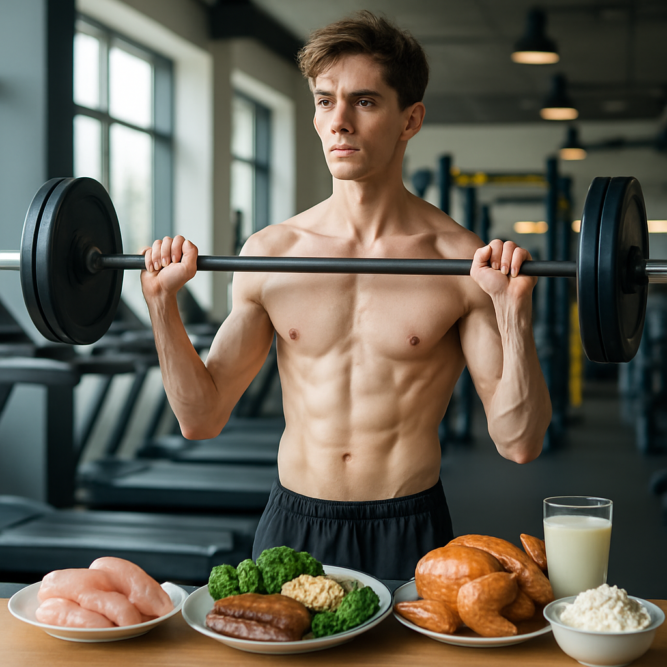
Bulking up as a naturally skinny guy is absolutely possible, but it requires a very specific approach to eating, strength training, and recovery. The central idea is simple: to go from skinny to muscular, you must consistently eat more calories than you burn, prioritize protein, and follow a progressive strength-training program that forces your muscles to grow. When those pieces are supported with enough sleep and smart recovery, even hard gainers can add noticeable size and strength.
For many skinny guys, the biggest obstacle to building muscle is not the workout, but the diet. Muscle gain depends on a sustained calorie surplus, which means consuming more energy than the body uses each day. Many people think they “eat a lot” yet stall for months because they underestimate their intake. A useful starting point is to calculate total daily energy expenditure to understand how many calories the body burns in a typical day, including normal activity and exercise. From there, bumping daily calories by a modest amount to gain about 0.25–0.5% of body weight per week helps promote lean mass without excessive fat gain. If the scale and progress photos do not change after a couple of weeks, the solution is straightforward: add a few hundred more calories per day and reassess.
Within that calorie surplus, protein intake is a top priority for muscle growth. Protein provides the amino acids needed to repair and build muscle tissue after tough workouts. A practical guideline is to consume roughly 0.8–1 gram of protein per pound of body weight each day, with plant-based eaters leaning toward the higher end to cover for less complete amino acid profiles. This can come from meat, poultry, fish, eggs, dairy, beans, and other high-protein foods. A palm-size portion of meat or fish typically delivers around 20–30 grams of protein, so building meals around these portions makes hitting daily targets more manageable. For those who struggle to eat enough solid food, protein shakes are a convenient way to increase both protein and total calories.
Carbohydrates and fats make up the rest of the bulking diet and play crucial roles. Carbs replenish muscle glycogen, support training performance, and help prevent the body from breaking down muscle for energy. Staples like rice, oats, potatoes, pasta, and whole-grain bread are dense, easy-to-measure carb sources that fit well into a muscle-building meal plan. Dietary fat is calorie-dense and can be very helpful for skinny guys who feel full quickly. Foods such as nuts, nut butters, avocado, olive oil, and full-fat dairy add a lot of energy in relatively small volumes. A thumb-size portion of oils or nuts can contribute over 100 calories, which adds up quickly over the course of a day. Including vegetables and fruit with meals is also important: they provide fiber and micronutrients that support digestion and overall health, which becomes more relevant as total food volume increases.
Supplements are not magic, but a few can support a bulking strategy when used correctly. Protein powder is essentially a convenient food, not a requirement, yet it can make it significantly easier to reach daily protein needs, especially when blended into high-calorie smoothies with oats, fruit, and healthy fats. Creatine is one of the few well-researched supplements for muscle building; it helps muscles store more energy, supports higher training intensity, and often increases scale weight through water retention in muscle cells. Beyond these, most products marketed to skinny guys promise more than they deliver, and real progress still comes from consistent eating and training rather than pills and powders.
On the training side, the fastest route from skinny to muscular is progressive strength training that focuses on big compound movements. Every challenging session slightly damages muscle fibers, which then rebuild stronger if the body has enough nutrition and recovery. The key concept is progressive overload: gradually increasing weights, reps, or overall workload so the muscles never get comfortable. For most people, working each major muscle group at least twice per week and accumulating roughly 10–20 hard sets per muscle group per week strikes a good balance between stimulus and recovery. A typical rep range of 6–15 per set, taken close to technical failure, supports both size and strength. Whether the goal is bulking up the chest, back, legs, or arms, consistently adding small amounts of weight to the bar or extra reps over time drives hypertrophy.
Classic barbell and dumbbell exercises are particularly effective for bulking up fast because they allow precise progression. Squats, deadlifts, bench presses, overhead presses, rows, pull-ups, and dips recruit many muscles at once and respond well to increased loading. Starting with weights that allow good form and then adding small increments weekly is safer and more sustainable than ego lifting. Training tempo matters too: controlling the lowering phase of a lift for a couple of seconds keeps muscles under tension longer and can help stimulate growth, while moving the weight up athletically but under control reduces injury risk. Rest periods of one to three minutes between working sets usually provide enough recovery to lift heavy and still accumulate volume.
Bodyweight training can also support bulking, provided the exercises are challenging enough to bring muscles near failure in the target rep range. Movements like push-ups, pull-ups, dips, inverted rows, lunges, and pistol squats can all be progressed by changing leverage, increasing range of motion, or adding external load. For example, once standard push-ups become easy, elevating the feet or using rings increases difficulty. Similarly, using a weighted backpack or belt during pull-ups can keep the exercise challenging as strength improves. The same principles apply: progressively harder variations plus sufficient calories equal muscle growth, even without a full gym.
Skinny guys who also carry extra fat around the midsection often wonder whether to bulk or cut first. One viable strategy is to focus on heavy strength training while eating at a small calorie deficit or maintenance, prioritizing protein intake. This approach can slowly reduce body fat while building muscle, leading to a more athletic look without drastic changes in clothing size. However, attempting to maximize both fat loss and muscle gain at the same time is slower than focusing on one goal, so there may be times when it makes sense to shift toward a dedicated bulk or cut based on progress and personal preference.
Recovery is an often overlooked but essential part of bulking up. Muscles grow between workouts, not during them, and most need at least a day or two to fully recover from heavy training. Hitting the same muscle group hard on consecutive days can stall progress and increase injury risk. Sleep is just as crucial: aiming for solid, consistent nights of rest gives the body the hormonal environment it needs to repair tissue and grow. Excessive long-distance cardio can compete with muscle-building efforts, both because it burns a lot of calories and because it encourages endurance adaptations rather than size. Light to moderate activity like walking, easy cycling, or short bouts of intervals can support cardiovascular health without significantly hindering gains, as long as total calories remain high enough.
For skinny guys trying to bulk up, common worries include getting “too bulky,” needing to eat every few hours, or finding the perfect workout plan. In reality, becoming truly bulky takes years of sustained surplus and heavy lifting, so the risk of accidentally turning into a bodybuilder overnight is virtually nonexistent. Meal timing is less important than total daily calories and protein, so those who prefer fewer, larger meals can still make excellent progress. As for the best workout, many different routines can work as long as they are based on progressive overload and performed consistently. The real drivers of change are effort, adherence, and nutrition, not minute details of set and rep schemes.
Putting it all together, bulking up fast as a skinny guy means eating enough high-quality food to support weight gain, emphasizing protein, carbs, and fats in appropriate amounts, using strength training to progressively overload the muscles, and giving the body time to recover and grow. Monitoring body weight, appearance, and gym performance over weeks and months, then adjusting calories and training as needed, turns the process into a manageable system rather than a guessing game. With patience and consistency, even long-time hard gainers can build the kind of lean, muscular physique they once assumed was out of reach.



Leave a Reply