


Healthy Foods to Help You Gain Weight Safely
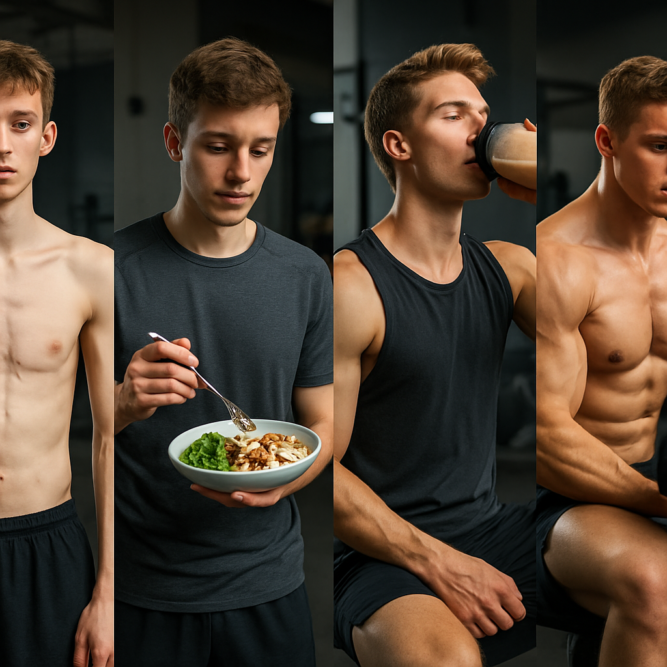
Bulking up fast starts with a simple truth: if a skinny guy wants to build muscle, the biggest driver is not more gym time, but eating enough food. The article argues that most people who struggle to gain weight are training hard enough, or even too hard, but under-eating so consistently that muscle growth never gets the fuel it needs. For anyone trying to bulk like the Hulk, the real formula is steady calorie surplus, smart strength training, and enough recovery for the body to actually rebuild bigger and stronger.
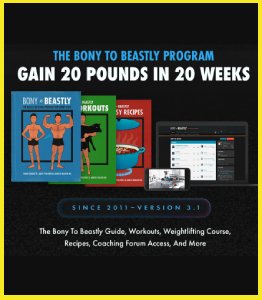
The author tells a long personal story to make that point clear. Years of hard training, protein shakes, and gym effort produced almost no visible muscle because calories were too low. Only when the workout plan was simplified and food intake was increased did rapid progress happen, including a major 18-pound gain in 30 days. That change did not come from magic or perfect genetics. It came from finally matching muscle-building goals with the right nutrition and a much more realistic understanding of how the body grows.
The first priority in any bulking diet is calories. The article stresses that if body weight is not increasing, the person is not eating enough. It recommends calculating total daily energy expenditure, or TDEE, to estimate how many calories the body burns in a day, then adding enough extra calories to gain about 0.25% to 0.5% of body weight per week. For a 150-pound person, that usually means roughly 200 to 400 extra calories per day to start. After two to three weeks, the person should reassess weight and photos and increase food again if progress is too slow. The advice is intentionally conservative because trying to gain too fast usually adds more fat than muscle.
Protein comes next, but the article is careful not to overstate it. Protein supports muscle repair and growth, and the recommended target for most active people trying to build muscle is about 0.8 to 1 gram per pound of body weight, or 1.6 to 2.2 grams per kilogram. Plant-based eaters may need slightly more because some vegetarian and vegan protein sources are less complete in amino acid profile. The article also explains that protein should not be treated as an excuse to ignore total calories. In other words, high protein helps, but extra protein alone will not create a bulk if overall food intake stays too low.
Carbohydrates and fats are presented as the calorie tools that help the bulking process actually work. Carbs refill muscle glycogen, support training energy, and help spare protein from being used as fuel. Good bulking carbs include rice, oats, potatoes, quinoa, lentils, pasta, bread, and fruit. Fats are calorie-dense and useful for people who struggle to eat enough without feeling overly full. Foods like avocado, nuts, olive oil, nut butters, and full-fat dairy make it easier to push calories higher. The article also says vegetables still matter, especially for fiber and general health, because eating more food without enough produce can leave digestion and overall nutrition behind.
Supplements are treated as secondary, not essential. The article dismisses most supplements as unnecessary and highlights only two worth considering for bulking: protein powder and creatine. Protein powder is useful because it makes it easier to raise both protein and calorie intake, especially in shakes. Creatine is praised for helping muscles retain water and support harder training, which can contribute to strength and size gains. Even so, the article makes clear that supplements are not a substitute for eating enough and training properly.
One of the practical strategies the article emphasizes is using liquid calories. Shakes are easier to consume than huge meals, which matters for skinny guys who get full quickly. A high-calorie smoothie with oats, spinach, berries, protein powder, and optional milk can pack in substantial calories and protein without feeling as heavy as solid food. The article also recommends keeping protein at the lower end of the target range when appetite is low, since protein is filling. Instead, people should increase carbs and fats, make food more palatable, and slowly expand portion sizes over time until their stomach adapts to the larger intake.
Training is the second half of the bulking equation, but the article keeps the focus on progressive overload. To get bigger muscles, the body needs to get stronger by repeatedly doing slightly more over time, whether that means more weight, more reps, or more sets. The article recommends training with enough intensity that each working set ends one to three reps before failure, while keeping form strict and tempo controlled. Most beginners are advised to train each major muscle group at least twice a week, often through full-body workouts three times per week. Movements like squats, deadlifts, bench presses, overhead presses, rows, pull-ups, push-ups, and dips are highlighted because they build the most muscle for the effort.
The article’s sample bulk-up routine reflects that principle with three full-body sessions per week and moderate rep ranges. It is not about doing endless exercises or chasing extreme soreness. It is about consistent, structured strength training with manageable volume and enough recovery to improve next session. The article also notes that bodyweight training can build muscle too, as long as the exercises are hard enough to reach near failure. Gymnasts are used as an example of how powerful bodyweight strength can be. Still, free weights are recommended for most beginners because progression is easier to track by simply adding weight.
A major warning is that skinny guys trying to bulk should not overdo cardio. Long-distance endurance work can make it harder to stay in a calorie surplus and can push the body toward a different kind of adaptation than size and strength. Shorter cardio sessions, walking, or light interval work are less likely to interfere, but the article suggests reducing heavy endurance training while trying to gain muscle. Sleep and rest are treated as just as important as food and lifting. Muscles grow during recovery, not during the workout itself, and most muscles need about 48 hours to recover after being trained hard. Without enough sleep, the body cannot repair and grow efficiently.
The article also addresses the common skinny-fat dilemma. For people who have low muscle mass but also extra belly fat, there is no single answer, but one effective option is to lift weights while eating at a slight calorie deficit and keeping protein high. That approach can help reduce fat while building some muscle at the same time, especially for beginners. Once body fat is lower and the body is leaner, the person can shift into a more deliberate bulking phase. The key tradeoff is that doing both goals at once is slower than focusing on one goal, but it can still be effective.
The final message is straightforward: to bulk up fast, eat more, lift progressively heavier, and recover well. The article repeatedly returns to the same core idea because it works. If the scale is not moving, food needs to go up. If strength is not going up, training needs to become more challenging. If progress stalls, the first place to look is usually calorie intake, not genetics, supplements, or the newest workout trend.



Leave a Reply