



Diet Chart for Weight Gain: A Complete Guide
Building muscle as a skinny guy is mostly about two things: eating enough calories and getting stronger over time. The article argues that many people who struggle to bulk up blame genetics too quickly, when the real problem is usually under-eating, poor training structure, or both. It also makes the case that you do not need to live in the gym or rely on dozens of supplements to gain size. What matters most is a simple, repeatable plan built around food, progressive overload, and recovery.
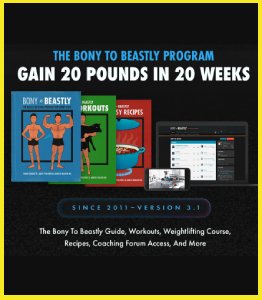
The author explains this from personal experience. For years, he trained hard, drank protein shakes, and still gained very little muscle because he was not eating enough. Once a trainer simplified his workouts and doubled his food intake, he gained 18 pounds in 30 days and finally understood that muscle growth starts with a calorie surplus. That lesson became the foundation of the guide: if you are not getting bigger, you are probably not eating enough. The body burns a large number of calories just to stay alive, and building new muscle requires even more fuel.
To bulk up effectively, the article recommends figuring out your total daily energy expenditure, or TDEE, which is the number of calories you burn in a day. From there, the goal is to eat a small surplus, usually enough to gain about 0.25 to 0.5 percent of your body weight per week. For someone weighing 150 pounds, that might mean adding roughly 200 to 400 calories per day. The article stresses that very rapid weight gain is usually not ideal, because the body can only build muscle so fast. Extra calories beyond that limit are more likely to become fat, water, or stored glycogen rather than pure muscle.
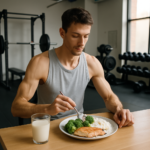
The nutrition advice is organized around the four main food groups that matter most for bulking up: protein, carbohydrates, fats, and vegetables. Protein is the first priority because it repairs and rebuilds muscle after training. The article suggests aiming for around 0.8 grams of protein per pound of body weight, or about 1 gram per pound if you want a simpler rule. Good sources include meat, eggs, dairy, fish, legumes, and plant-based proteins. Carbohydrates come next because they refill muscle glycogen, support training performance, and help protect muscle tissue from being used for energy. Recommended carb sources include rice, oats, potatoes, quinoa, bread, pasta, lentils, and similar staples.
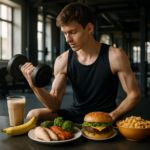
Fats are presented as a useful way to increase calories without feeling overly full. Foods like avocado, nuts, nut butters, olive oil, and full-fat dairy can raise daily intake quickly, which is especially helpful for hard gainers. The article notes that saturated fat can still fit into a bulking diet in moderation. Vegetables are included not because they add many calories, but because they help with digestion, fiber, and micronutrients when food intake is high. In other words, a good muscle-building diet is not just about eating more junk; it is about balancing calories, protein, carbs, fats, and enough fiber to keep the whole system working well.
When it comes to supplements for bulking up, the article is skeptical. Most supplements are described as unnecessary, but two are recommended: protein powder and creatine. Protein powder is useful when regular meals do not provide enough protein or calories. Creatine can help muscles hold more water and improve strength and workout performance, which may support muscle growth over time. The article also recommends liquid calories, such as high-calorie shakes, because they are easier to consume than large meals. One example shake combines oats, spinach, berries, water, and protein powder for a large calorie and protein boost. The practical advice is to raise food intake gradually, use calorie-dense ingredients, and avoid filling up too quickly on low-calorie foods.
Training advice centers on progressive overload, which means gradually making workouts harder so muscles have a reason to grow. The article explains that getting bigger depends on getting stronger, and that strength training should focus on compound movements like squats, deadlifts, presses, rows, pull-ups, dips, and push-ups. It recommends training each major muscle group about twice per week and using roughly 10 to 20 working sets per muscle group per week. For many people, a rep range of 6 to 15 works well, with sets taken close to failure but not so far that technique breaks down. The specific exercise split matters less than consistency, effort, and steady progress.
The article gives a sample three-day bulking program built around full-body workouts on Monday, Wednesday, and Friday. It also notes that bodyweight training can absolutely build muscle if the exercises are hard enough and continue to progress. Gymnasts are used as an example of athletes who build impressive physiques without traditional weights. Still, the article argues that free weights are often easier for beginners because it is simpler to track progress by adding small amounts of weight. Whether using barbells, dumbbells, machines, or bodyweight movements, the key is to keep increasing difficulty over time.
For people who are skinny fat, the article lays out a slightly different path. If someone has a thin frame but carries extra fat around the midsection, the best move may be to lose fat while strength training and eating enough protein, rather than trying to bulk immediately. That approach can improve body composition at the same time, although the article warns that simultaneous fat loss and muscle gain are slower than focusing on one goal at a time. Once body fat is under control, the person can shift into a controlled bulking phase.
Recovery is treated as the third pillar of muscle growth after training and nutrition. The article says muscles need time to repair, often around 48 hours before the same muscle group should be trained again hard. Sleep is especially important because much of the rebuilding happens during rest. Long-distance cardio is framed as a potential obstacle for skinny guys trying to bulk because it burns calories and makes it harder to stay in a surplus. Light activity, walking, or occasional interval training can still fit, but the article suggests cutting back on high-volume endurance work until weight-gain goals are reached.
The FAQ section addresses common fears, especially the worry about getting “too bulky.” The article argues that most skinny guys are far from that problem and would need to gain a significant amount of muscle before size became an issue. It also says meal timing is less important than total daily calories and protein, so eating every three hours is not required. Vegetarian and vegan lifters can also bulk up, but they may need to be more careful with calorie and protein intake, and may need to aim slightly higher on protein targets. Overall, the message stays simple: eat more, lift progressively, sleep enough, and give the process time.



Leave a Reply