


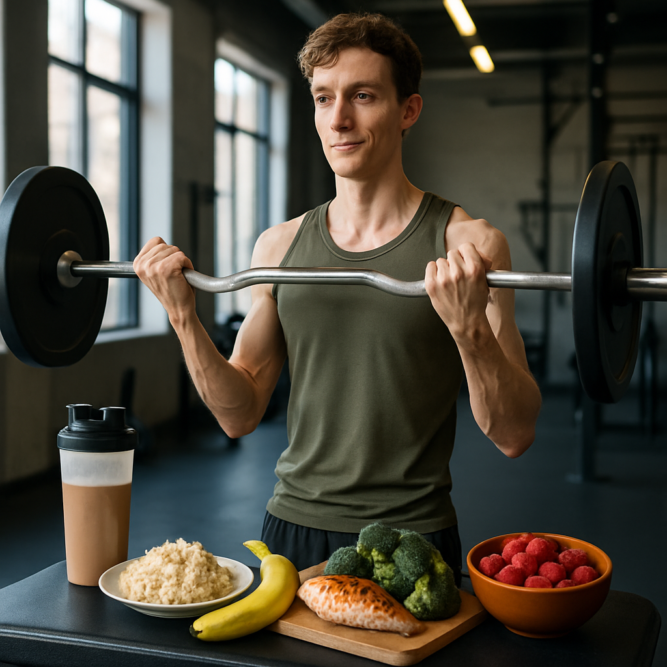
How Weight Gain Can Affect Athletic Performance
For skinny guys trying to bulk up fast, the article’s central message is simple: eat enough, lift smart, and recover well. Muscle growth does not come from endless gym sessions alone; it comes from a calorie surplus, adequate protein, progressive strength training, and enough rest for the body to rebuild.
The author opens with a personal story of being a naturally skinny kid who struggled for years to gain weight and muscle. Early efforts included long gym sessions, protein shakes, and lots of effort with very little visible progress. The turning point came after a trainer simplified the workout plan and doubled food intake, leading to 18 pounds gained in 30 days. That experience reshaped the author’s view of bulking: gaining muscle is not about doing everything possible, but about doing the right things consistently.
The first and most important lesson for bulking up is to eat more calories than the body burns. The article emphasizes that muscle is built in the kitchen as much as in the gym. A person can train frequently and still fail to gain size if calorie intake is too low. The guide recommends estimating daily energy needs with a TDEE calculator, then eating enough above maintenance to gain about 0.25% to 0.5% of body weight per week. For a 150-pound person, that might mean only 200 to 400 extra calories per day at first. The advice is to track food for a few days, get a realistic average, and then adjust upward if weight is not increasing after two to three weeks.
The article also makes clear that there is a ceiling to how fast the body can build muscle naturally. Bigger surpluses do not equal faster muscle gain; beyond a certain point, extra calories are more likely to become body fat, water, and glycogen. That does not mean some fat gain is a mistake, only that a slow and controlled bulk is usually better than chasing dramatic short-term scale changes. The goal is steady, sustainable weight gain that can be kept on.
Nutrition is broken down into four priorities: protein, carbohydrates, fats, and vegetables. Protein comes first because it supports muscle repair and growth after training. The article recommends roughly 0.8 grams per pound of body weight for most active people, or about 1 gram per pound for those using plant-based protein sources. Foods like meat, eggs, dairy, fish, beans, and lentils can all help hit that target. Carbohydrates are next because they refill muscle glycogen and help preserve protein from being used for energy. Good bulking carbs include rice, oats, pasta, potatoes, quinoa, bread, fruit, and legumes.
Fats are presented as a useful calorie-dense tool, especially for people who struggle to eat enough without feeling overly full. Foods like avocado, nuts, nut butters, olive oil, and fatty cuts of meat can make it easier to raise daily calories. The article notes that saturated fats can fit into a bulking diet in moderation. Vegetables are still important, not because they drive weight gain, but because they provide fiber and micronutrients that support digestion and overall health when food intake rises.
The author also explains that supplements are usually overhyped. Most are unnecessary, but two are worth considering for bulking up: protein powder and creatine. Protein powder helps people reach daily protein and calorie targets more easily, especially in shake form. Creatine is highlighted for helping muscles retain water and support better workout performance, both of which can aid muscle gain. Beyond that, the article argues that supplementation should not distract from food quality, calorie intake, and training.
A major practical tip is to use liquid calories. Smoothies and shakes can add a large number of calories without making someone feel stuffed. The article gives an example of a high-calorie shake made with oats, spinach, berries, protein powder, and water, and notes that milk or other calorie-rich liquids can raise the total even more. It also recommends keeping protein at the lower end of the target range if appetite is a problem, since protein is very filling. Increasing portion sizes slowly and adding meals over time can help the stomach adapt.
On the training side, the article stresses that getting bigger means getting stronger. Strength training creates the stimulus for muscle growth, and progressive overload is the key idea. That means slowly increasing weight, reps, sets, or exercise difficulty over time. The guide suggests 10 to 20 working sets per muscle group per week, with many people thriving in the 6 to 15 rep range. Working sets should be close to failure, usually leaving just one to three reps in reserve. The article recommends controlled lowering phases, enough intensity to challenge the muscles, and training major muscle groups at least twice per week.
A simple full-body routine is included as an example, built around squats, deadlifts, bench presses, rows, pull-ups, dips, and presses. The exact plan matters less than the principle: lift heavy enough to stimulate adaptation, track progress, and keep adding difficulty over time. The article also says bodyweight training can build serious muscle if the movements are difficult enough and progression continues. Exercises like pull-ups, push-ups, dips, lunges, and rows can all work well, but many beginners find free weights easier to measure and progressively overload.
For people who are skinny fat, the article gives a more nuanced answer. Instead of choosing only between bulking or cutting, it explains that some people can lose fat and build muscle at the same time, especially when they are new to strength training. The recommendation is to prioritize heavy compound lifts, eat enough protein, and use a slight calorie deficit if reducing body fat is also a goal. Once body fat reaches a level the person is happy with, they can switch to a muscle-gain phase.
Recovery is treated as essential, not optional. Muscles grow during rest, not during the workout itself, so the article recommends about 48 hours before seriously training the same muscle group again. It also warns that too much long-distance cardio can make bulking harder because it burns calories and pushes the body toward endurance adaptations instead of size. Light cardio, walking, and occasional intervals are acceptable, but high-volume endurance work may slow mass gain. Sleep is the final pillar, since the body needs more rest when trying to recover from hard training and grow new tissue.
The article closes with a simple formula: lift progressively, eat enough, and sleep enough. It argues that skinny guys do not need to overcomplicate bulking with perfect meal timing or endless exercise variety. The most reliable path is still the same: calculate calories, hit protein goals, prioritize calorie-dense whole foods, train with compound movements, and stay consistent long enough for the body to respond.



Leave a Reply