


Surprising Causes of Weight Gain and When to Worry
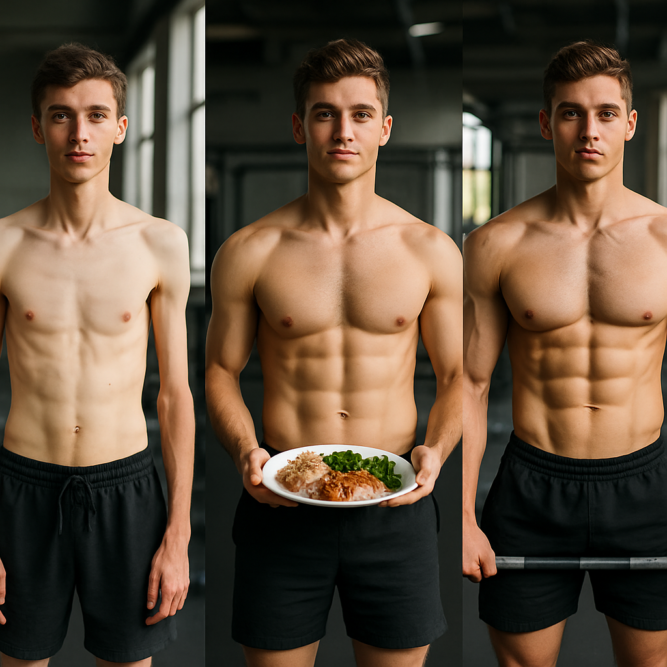
Bulking up fast is not about endlessly chasing the “perfect” workout or taking a mountain of supplements. The central lesson of this guide is simple: if a skinny guy wants to gain muscle, the biggest levers are eating enough calories, training with progressive overload, and recovering well enough for the body to actually build new tissue. Genetics matter, and muscle gain is never instant, but consistent habits can completely change how someone looks and feels over time.
The article begins with a personal story of years spent training hard but barely gaining size. Despite lifting regularly and drinking protein shakes, progress stayed minimal because the diet was too small to support muscle growth. A turning point came after receiving simpler training advice and a major increase in food intake. In just 30 days, significant weight gain and strength improvements followed, showing that bulking up fast often starts with fixing the basics rather than adding complexity. The broader lesson is that many naturally skinny people assume they “just can’t gain weight,” when in reality they are usually not eating enough to support growth.
Nutrition is presented as the most important part of bulking up. Muscle is built in the gym, but it is fueled and repaired in the kitchen. The body burns calories simply by existing, and exercise adds even more demand, so anyone trying to bulk needs to eat above maintenance. The article recommends estimating total daily energy expenditure, tracking intake for a few days, and then increasing calories gradually until weight begins rising at a slow, controlled pace. A target gain of about 0.25% to 0.5% of body weight per week is suggested, because faster gain usually means more fat than muscle. The point is not to eat wildly or force huge jumps on the scale, but to consistently supply enough energy for lean mass gain.
The article breaks food priorities into four main categories: protein, carbohydrates, fats, and vegetables. Protein comes first because it provides the building blocks for muscle repair and growth. A practical target is around 0.8 to 1 gram of protein per pound of body weight each day, with plant-based eaters sometimes needing slightly more. Good protein sources include meat, eggs, dairy, fish, legumes, and other high-protein vegetarian foods. Carbohydrates come next because they refill muscle glycogen and help support hard training, with staples like rice, oats, potatoes, bread, pasta, quinoa, and legumes making it easier to reach a calorie surplus.
Dietary fat is also important because it is calorie-dense and helps people who struggle to eat enough without feeling overly full. Foods like avocado, nuts, nut butters, olive oil, and fatty cuts of meat can raise calorie intake quickly. Saturated fat is not banned in a bulking plan, but it should stay moderate. Vegetables still matter even during a mass-gain phase because extra food can create digestive issues if fiber and micronutrients are ignored. A balanced plate approach helps make the diet sustainable, and the article emphasizes that the biggest nutritional mistake is usually not eating too much protein or too many vegetables, but simply not eating enough total food.
Supplements are treated as secondary, not essential. Most are described as unnecessary, but two stand out for people trying to bulk up: protein powder and creatine. Protein powder can make it easier to hit daily protein and calorie targets, especially when appetite is low. Creatine is valued because it can help muscles retain water and improve workout performance, which supports strength gains and muscle growth. Beyond those, the article argues that most supplement marketing is unnecessary noise. For skinny guys who have trouble eating enough, liquid calories are especially useful, since shakes and smoothies can deliver a large number of calories without making meals feel overwhelmingly heavy. The article’s example shake combines oats, spinach, berries, and protein powder for a high-calorie, high-protein meal replacement.
Training is the next major pillar. To grow bigger muscles, the body must be challenged with progressively harder resistance. This means gradually increasing weight, reps, or sets over time, a process known as progressive overload. The article recommends training each major muscle group at least twice per week and using roughly 10 to 20 working sets per muscle group weekly as a starting point. Most lifters do well in the 6 to 15 rep range for hypertrophy, though recent research suggests that a wider rep range can work if the set is taken close to failure. The key is not to destroy every workout, but to use enough effort that the muscles are forced to adapt.
The guide also gives a practical framework for how to lift. Working sets should usually end one to three reps short of failure, with controlled lowering on each lift to maintain tension and reduce injury risk. Full-body workouts are recommended for most beginners because they are efficient and allow the same muscles to be trained multiple times per week without excessive gym time. Core movements like squats, deadlifts, bench presses, overhead presses, rows, dips, push-ups, and pull-ups form the backbone of an effective bulking routine. The article provides sample Monday, Wednesday, and Friday workouts to show how a simple program can hit the entire body while keeping the emphasis on getting stronger.
Bodyweight training can also build muscle, but only if the exercises remain challenging enough. Gymnasts are used as proof that bodyweight-only training can produce impressive size and strength. Still, the same principles apply: the movements must create enough tension and be close enough to failure to stimulate growth. As bodyweight exercises become easier, they must be made harder through variations, added reps, or weighted progressions. Free weights are often easier for beginners because the overload is simpler to measure and progress. The article’s larger message is that the best workout is the one that can be followed consistently while continuing to get harder over time.
The guide also addresses a common concern: being skinny fat. For people with thin limbs and a softer midsection, the answer is not always a pure bulk. The article explains that some people can lose fat and build muscle at the same time by combining heavy strength training with a slight calorie deficit and enough protein. This approach works best for those carrying extra body fat, especially if the goal is to improve body composition before trying to add more size. Once body fat reaches a more comfortable level, calorie intake can increase again to support a cleaner bulk. The tradeoff is that simultaneous fat loss and muscle gain happen more slowly than focusing on one goal at a time.
Recovery is the final piece. Muscle growth happens during rest, not while lifting. The article recommends allowing about 48 hours for a muscle group to recover before training it hard again, prioritizing sleep, and limiting excessive long-distance cardio if the main goal is mass gain. Cardio is not forbidden, but too much endurance work can make it harder to eat enough and can push the body toward efficiency rather than size. Walking, light movement, and short interval sessions are better fits for many bulking plans than frequent long runs. Sleep matters just as much, because hard training increases the need for recovery and poor sleep can slow progress.
The overall message is that bulking up fast is really about doing a few things well and doing them consistently. Eat in a calorie surplus, aim for enough protein, choose carbohydrate- and fat-rich foods that make it easier to reach your calorie target, train with progressive overload, and give the body enough time to recover. For naturally skinny guys, this process may feel slow, but that is normal. Real muscle gain comes from steady habits, not magic shortcuts.



Leave a Reply