


Healthy Ways to Gain Weight If You’re Underweight
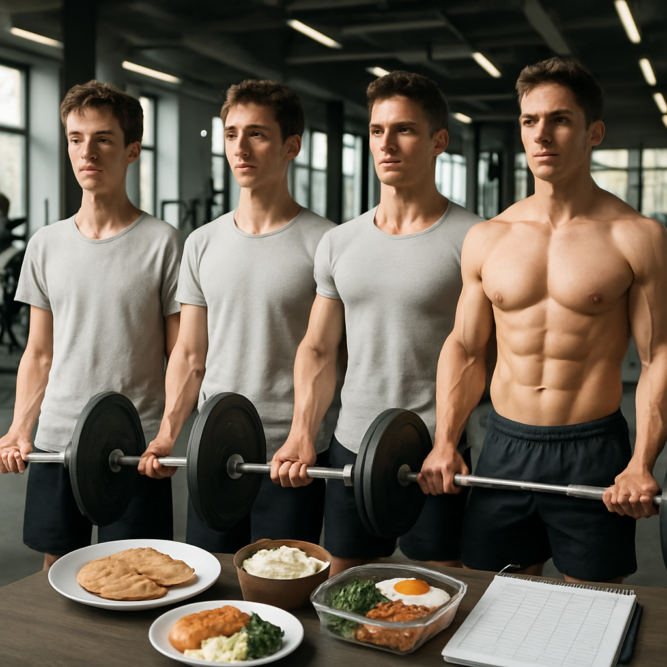
Bulking up as a naturally skinny guy is less about living in the gym and more about finally eating and training in a way that lets the body build muscle. Many people assume they “just can’t gain weight,” when in reality they are underestimating how many calories and how much protein they need, or they are lifting without a clear plan to get stronger over time. When nutrition, strength training, and recovery are all aligned, even hardgainers can go from skinny to muscular steadily and safely.
For skinny guys, the cornerstone of any bulking plan is consistently eating more calories than the body burns. The body can easily burn 2,000 or more calories per day just to keep you alive, and exercise adds to that total. If scale weight and measurements are not going up across several weeks, the issue is almost always calorie intake, not genetic limitation. Calculating total daily energy expenditure (TDEE) is a practical starting point: estimate how many calories you burn based on age, weight, height, and activity, then deliberately eat above that number. A sensible target is to gain about 0.25–0.5% of body weight per week, which usually means adding roughly 200–400 calories per day and then adjusting every few weeks based on progress. This slow, steady surplus minimizes excessive fat gain while still supporting muscle growth.
Within that calorie surplus, protein intake is crucial for bulking up. Protein provides the raw material the body uses to rebuild muscle tissue after strength training. A simple, effective guideline is to consume around 0.8–1.0 grams of protein per pound of body weight each day, leaning toward the higher end if most of the protein comes from plant sources. Meat, poultry, fish, eggs, dairy, legumes, and nuts all contribute to daily protein needs, and protein shakes can make it easier to hit targets without feeling overly full. Once protein is in place, the remaining calories should come from a mix of carbohydrates and fats tailored to preference and digestion. Carbs like rice, oats, potatoes, pasta, bread, and fruit help refill muscle glycogen so the body doesn’t break down muscle for energy. Fats from foods such as avocado, nuts, nut butters, olive oil, and full-fat dairy are calorie-dense, which makes them especially useful for hardgainers who struggle to eat enough.
Because eating significantly more food can be uncomfortable at first, it helps to think strategically about how to get those extra calories in. Liquid calories are a major ally in a bulking diet. High-calorie smoothies built with protein powder, oats, milk or plant milks, nut butter, and fruit can deliver hundreds of calories and substantial protein without feeling as heavy as a large meal. Choosing more flavorful, energy-dense foods with a mix of carbs and fats also makes it easier to eat enough because these foods tend to be less filling for the same number of calories. Gradually increasing portion sizes over time, adding an extra quarter-cup of rice here or an extra spoonful of nut butter there, lets the stomach adjust to the higher intake. For those who chronically undereat, spreading food over more frequent meals or snacks can help reach calorie goals without relying on massive plates of food.
Strength training is the other half of the bulking equation. Muscle growth is a response to stress: lift heavy or challenging loads, the body breaks down muscle fibers, then rebuilds them stronger and bigger as long as nutrition and recovery support that process. The most effective way for a skinny guy to bulk up is to focus on getting stronger through progressive overload. This means regularly increasing the resistance, reps, or sets performed over weeks and months. For most people, compound lifts like squats, deadlifts, bench presses, overhead presses, rows, dips, and pull-ups should form the core of a bulking workout plan because they train multiple muscle groups at once and allow for heavier loads. A typical beginner schedule might involve full-body workouts two to four times per week, with each session including a few big lifts in the 6–15 rep range for 2–3 hard sets. The key is that each working set gets close to muscular failure while maintaining good form.
Training volume, intensity, and tempo all matter for maximizing muscle growth. Total weekly volume in the range of 10–20 hard sets per muscle group tends to be effective for hypertrophy, distributed across two or more sessions. Intensity should be high enough that each set ends with only one to three reps left in the tank, which forces adaptation without risking form breakdown. Controlling the lowering phase of each lift for a few seconds and avoiding sloppy, rushed repetitions keeps tension on the muscles longer and reduces injury risk. As long as the program hits each major muscle group at least twice per week and progressively becomes more challenging, it will support bulking for skinny guys when combined with appropriate nutrition.
Bodyweight training can also be used to bulk up, provided the same principles apply. Exercises such as push-ups, inverted rows, pull-ups, dips, lunges, and single-leg squats can build impressive size and strength when performed in variations that are difficult enough to challenge the muscles. If a movement becomes too easy for 15 or more reps, it needs to be progressed by changing leverage, adding weight, or moving to a harder variation. For example, elevating the feet during push-ups or working toward pistol squats dramatically increases difficulty. Whether using barbells, dumbbells, machines, or bodyweight, the goal for a skinny guy’s workout plan is the same: keep making exercises tougher over time so the muscles have a reason to grow.
Many skinny guys describe themselves as “skinny fat,” with narrow limbs and a soft midsection, and wonder whether to lose fat or gain weight first. One practical approach is to focus initially on recomposition: heavy strength training combined with sufficient protein and a slight calorie deficit or maintenance. This can reduce body fat percentage while simultaneously building muscle, leading to a leaner, more muscular look without big swings in scale weight. Once body fat is down to a comfortable level, calories can be increased gradually to support more aggressive bulking. There is a tradeoff: trying to lose fat and gain muscle at the same time is slower than focusing on one goal, but it can be easier to maintain and avoids buying bigger clothes just to shrink again later.
Recovery is the often overlooked third pillar of bulking that skinny guys cannot afford to ignore. Muscles grow between workouts, not during them, and most people need about 48 hours before training the same muscle group hard again. Off days are ideal for light activity such as walking, mobility work, or very easy cardio rather than more intense lifting. Long-distance cardio and high volumes of endurance training make bulking far more challenging because they burn significant calories and encourage the body to adapt for efficiency rather than size. Shorter, low-intensity sessions or occasional sprints can be included if desired, but when the main objective is gaining muscle and body weight, heavy strength training and eating enough should be the priority.
Sleep is equally important for building muscle. Hormones involved in growth, recovery, and appetite regulation are heavily influenced by sleep quality and duration. Heavy lifting sessions, especially those involving big compound movements like deadlifts and squats, place a large demand on the body, and it is normal to feel the need for extra sleep afterward. Consistently getting enough high-quality sleep makes it easier to train hard, stick to a bulking diet, and actually convert those extra calories into lean mass instead of fatigue and burnout.
Skinny guys also worry about getting “too bulky,” but in practice this is rarely a realistic concern. Adding 20–30 pounds of mostly muscle is a long-term project, not something that happens overnight. If at any point fat gain begins to outpace muscle or the physique looks softer than desired, calorie intake can be trimmed back slightly while continuing to strength train. The bigger risk for hardgainers is remaining stuck in the same skinny body because they are afraid to eat enough or lift heavy. By committing to a structured workout routine, tracking food and progress, increasing calories when the scale stalls, and respecting recovery, a skinny guy can bulk up fast enough to see motivating changes, yet slow enough to keep those gains under control and sustainable.



Leave a Reply