



Healthy Weight Gain Meal Plan: A Dietitian’s Guide
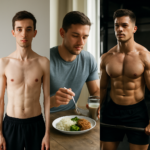
Bulking up as a naturally skinny guy is less about magic workouts and more about consistently eating enough food, lifting progressively heavier weights, and giving the body time to recover. Many people assume they “just can’t gain weight,” but in most cases the real issue is chronic undereating combined with scattered training. With the right approach, even someone with fast metabolism and small frame can build muscle and go from skinny to strong without turning into a professional bodybuilder or needing to live in the gym.
The foundation of gaining muscle is nutrition. The body needs a surplus of calories to support muscle growth, and if that surplus never exists, strength training will mainly improve performance without much size. A useful starting point is to estimate total daily energy expenditure, which includes the calories burned simply existing plus movement and exercise, then intentionally eat above that number. Tracking intake for a few days with a food app often reveals that “eating a lot” is less than it feels. A sustainable strategy is to aim for gaining about 0.25–0.5% of body weight per week, which often translates to adding roughly a couple hundred extra calories per day, then adjusting every few weeks if the scale and progress photos are not moving. Rapid weight gain beyond what the body can realistically convert to lean mass usually shows up as additional body fat rather than extra muscle.
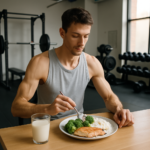
Protein intake is the next critical piece. When muscles are stressed in training, the body repairs them using amino acids, building them back larger and stronger. For most healthy, active people trying to build muscle, around 0.8 grams of protein per pound of body weight is a solid target, with plant-based eaters often benefitting from a slightly higher intake to account for differences in amino acid profiles. Practically, that means centering meals on foods like meat, poultry, eggs, fish, dairy, beans, or tofu and visually recognizing portion sizes that actually deliver meaningful protein. Supplemental protein powders can be helpful tools rather than necessities, especially for those who struggle to eat enough solid food throughout the day.
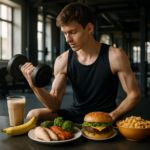
Beyond protein, carbohydrates and fats provide the bulk of the calories needed to fuel training and growth. Carbohydrates keep muscle glycogen stores topped up, which helps prevent the body from breaking down muscle tissue for energy when training volume rises. Staple carb sources such as rice, oats, potatoes, pasta, bread, lentils, and fruit make it easier to hit higher calorie goals while staying relatively nutritious. Dietary fats, from foods like avocado, nuts, nut butters, olive oil, whole milk, and fatty cuts of meat, are very calorie-dense, so small additions can significantly increase energy intake. Even saturated fats can fit in a bulking diet in moderation. Paying attention to portions of these foods makes it simpler to steadily increase calorie intake without feeling stuffed all the time.
Liquid calories are especially useful for skinny guys who feel full quickly or have low appetite. Smoothies made with protein powder, oats, milk or milk alternatives, frozen fruit, and even a serving of olive oil or nut butter can easily pack hundreds of calories into a convenient meal or snack. Because liquids are less filling than solid food, they are an effective way to reach daily targets without constant discomfort. Another strategy is to keep protein at the lower end of the optimal range instead of pushing it excessively high, which frees up room in the diet for more carbs and fats and reduces the feeling of being overly full.
Supplements play a supporting, not starring, role in bulking. Most products advertised in muscle magazines add little beyond cost. Two that consistently show up in research and practical experience are basic protein powders and creatine monohydrate. Protein powder is simply an efficient way to boost daily protein and calories. Creatine helps muscles store more energy and water, which can improve training performance and contribute to small gains in lean mass over time. Neither replaces food, progressive training, or rest, but they can make the process smoother.
On the training side, muscle growth depends on progressive overload: regularly increasing the demands placed on the muscles so they are forced to adapt. In practice, this means steadily adding weight, reps, or sets to key compound lifts over many weeks and months. A simple full-body routine performed two to four times per week can be enough to drive impressive gains when paired with proper eating. Exercises like squats, deadlifts, bench presses, overhead presses, rows, dips, push-ups, and pull-ups train multiple muscle groups at once and allow measurable increases in load and volume. Most people do well working in a moderate rep range, roughly 6–15 reps per set, pushing close to technical failure while maintaining good form.
Training volume and intensity matter, but they do not need to be overly complicated. Aiming for roughly 10–20 working sets per muscle group per week, divided across sessions, covers the needs of most intermediate trainees. Rest periods of one to three minutes between hard sets allow sufficient recovery to lift challenging weights. The tempo of each rep also influences muscle growth: controlling the lowering phase for a couple of seconds, pausing briefly, then lifting with power keeps tension on the muscle and reduces the chance of injury. The key is consistency; picking a sensible plan and following it for months while tracking performance will beat constantly switching programs.
Bodyweight training can absolutely build muscle when approached with the same progressive mindset. Gymnasts and calisthenics athletes are proof that lifting one’s own body can create impressive physiques. For a skinny guy training at home, movements such as push-ups, dips, inverted rows, lunges, pull-ups, and squats can be gradually made harder by changing leverage, elevating feet, working toward single-leg variations, or eventually adding external weight like a backpack. The main challenge is finding ways to keep increasing difficulty once basic versions become easy. Sometimes this means using higher rep ranges, like 15–30 reps per set, or creatively altering angles to maintain progression.
Sleep and recovery complete the muscle-building puzzle. Training breaks down muscle tissue, but growth happens between sessions. Most major muscles benefit from roughly 48 hours before being worked hard again, which is why back-to-back heavy days for the same body part are not ideal for many lifters. Off days can include light activity such as walking, but should still allow joints and nervous system to rest. Adequate sleep, often more than usual, supports hormone regulation, recovery, and overall performance. Cutting back on very long-distance cardio is also wise during a focused bulk, as high volumes of endurance training burn many calories and push the body toward efficiency rather than size. Shorter bouts of low-intensity cardio or occasional intervals can be kept for heart health without severely affecting gains, provided calorie intake remains high.
Skinny-fat individuals, who have soft midsections but thin limbs, face a slightly different decision. They can either bulk first, cut first, or aim to recomposition, which means losing fat while gaining muscle slowly. Heavy strength training combined with a slight calorie deficit and sufficient protein often enables simultaneous fat loss and muscle gain. Many coaches recommend leaning down to a moderate body fat level before entering a true surplus so clothing changes are more manageable and visual progress is clearer. However, trying to achieve multiple goals at once always involves tradeoffs; progress in each direction is slower than focusing purely on bulking or purely on fat loss.
Common worries about “getting too bulky” are generally unfounded for people with a history of struggling to gain weight. Building significant muscle size takes years of dedicated training and eating. If unwanted fat gain occurs, adjusting calorie intake downward for a period is straightforward. Likewise, there is no requirement to eat every three hours or follow rigid meal timing rules; total daily intake matters far more than exact timing. Spacing meals out simply helps some individuals tolerate more food.
For naturally skinny guys, the path to bulking up is straightforward but not easy: calculate an appropriate calorie surplus, build meals around adequate protein, carbohydrates, fats, and vegetables, use strength training to progressively overload major muscle groups, minimize excessive endurance work, prioritize sleep, and stay consistent for months. With patience and steady effort, the combination of smart nutrition, focused strength training, and solid recovery can transform a thin frame into a stronger, more muscular physique.



Leave a Reply