


The 18 Best Healthy Foods to Gain Weight Fast
Bulking up as a naturally skinny guy is less about magical workouts and more about consistently eating enough food, following smart strength training, and giving the body time to recover. Many men assume they “just can’t gain weight” after years of lifting and drinking protein shakes with little visible muscle growth. In reality, the main problem is usually a long-term calorie deficit: the body never gets the energy and nutrients it needs to build new muscle tissue. When nutrition, training, and recovery are aligned, even those with skinny genetics can add significant size and strength over time.
The starting point for any skinny guy trying to bulk up fast is understanding how many calories the body uses each day and then deliberately eating above that amount. The total daily energy expenditure, or TDEE, includes the calories burned at rest plus those used for movement, exercise, and everyday fidgeting. If body weight is static week after week, calorie intake is simply matching this expenditure. To stimulate muscle growth and weight gain, daily calories must exceed TDEE by enough to drive a gradual increase in body weight. A practical target is gaining about 0.25–0.5% of body weight per week, which is slow enough to keep fat gain moderate but fast enough to notice changes across a month. For a 150‑pound person, this translates to roughly 0.3–0.75 pounds per week, or about 200–400 extra calories per day beyond maintenance.
Tracking calorie intake for a few days with an app or food log can be eye-opening for someone who believes they “eat a ton” but never gains. Many discover they are subconsciously under-eating, skipping meals, or choosing low-calorie foods. Once maintenance intake is understood, the next step is steadily increasing portion sizes or adding extra meals and snacks. Because professional bulking programs sometimes promise unrealistic gains, it is important to remember that natural muscle growth has limits. Under good conditions, a beginner might add close to a pound of lean mass per week, but for most people, one to two pounds per month is more realistic. Extra calories beyond what can be used to build muscle will be stored as fat and water, which is not necessarily negative as long as overall progress remains controlled.
Within those extra calories, protein intake is the cornerstone of muscle building. Dietary protein provides amino acids that repair and grow muscle tissue after strength training sessions. For healthy, active individuals aiming to build muscle, a sensible target is around 0.8 grams of protein per pound of body weight, with up to 1 gram per pound for those who prefer a simple rule of thumb or rely mostly on plant-based sources. That means a 150‑pound person would aim for 120–150 grams of protein per day from foods like meat, poultry, fish, eggs, dairy, legumes, and tofu, with protein shakes used as convenient backup rather than a primary source. Once protein needs are met, the remaining calories should come from a mix of carbohydrates and fats, both of which support performance and help reach the total energy target.
Carbohydrates are the body’s preferred fuel for intense training and play a key role in filling muscle glycogen stores, helping prevent the breakdown of muscle tissue for energy. Calorie-dense, nutrient-rich carb sources such as rice, oats, potatoes, sweet potatoes, quinoa, lentils, and whole‑grain bread or pasta work well for bulking because they are easy to portion and pair with protein. Fats, while more calorie-dense, are equally valuable, especially for skinny guys who struggle to eat big volumes of food. Adding foods like avocado, nuts, nut butters, seeds, olive oil, and full‑fat dairy can significantly increase calorie intake without excessively filling the stomach. Saturated fat from whole milk, fatty meat, or butter can be included in moderation, keeping it to a fraction of total fat intake as part of an overall healthy diet. Alongside these energy-dense foods, daily servings of vegetables and some fruit are important to support digestion, provide fiber, and supply vitamins and minerals needed for recovery and long-term health.
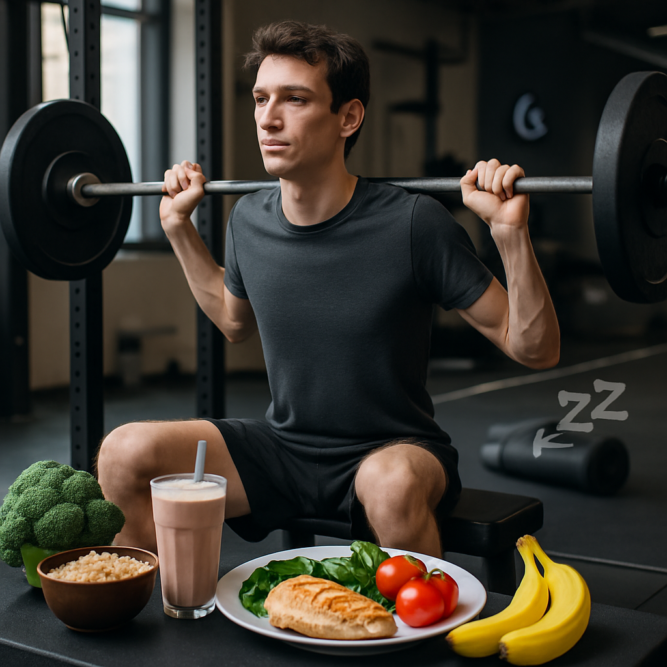
Because large meals can feel uncomfortable, liquid calories are one of the most practical tools for bulking up fast. Smoothies and shakes combine protein powder with ingredients like oats, milk, yogurt, nut butter, and frozen fruit or spinach to deliver hundreds of calories and substantial protein in a form that is easy to consume. A single well-designed shake can add 500–800 calories to the day, moving total intake closer to the level required for muscle gain. Power shakes can be adjusted based on preference, swapping water for whole milk, adding extra carbs, or including a spoonful of oil to further raise calorie content. For supplements, a simple approach works best: a quality protein powder and creatine monohydrate are the only two with strong evidence for supporting muscle growth and performance. Creatine helps muscles store more energy, improves strength output, and contributes to weight gain through increased water content in muscle cells, complementing the bulking process when combined with heavy training and a high-calorie diet.
Even perfect nutrition will not build muscle without progressive strength training. Muscle growth happens when the body is repeatedly challenged with resistance that is heavy enough to cause microscopic damage in muscle fibers, prompting them to repair and grow thicker and stronger. The key concept is progressive overload: gradually increasing the weight lifted, the number of reps or sets, or the difficulty of bodyweight movements so the muscles are never allowed to fully adapt and stagnate. For most skinny guys chasing size, a focus on big compound exercises—such as squats, deadlifts, bench presses, overhead presses, rows, dips, push-ups, and pull-ups—builds the greatest amount of mass because these movements recruit multiple large muscle groups at once.
A practical weekly structure is to train each major muscle group at least twice per week, using two to four full-body workouts or splitting sessions into upper and lower body days. For each exercise, performing two to three working sets in the 6–15 rep range and stopping within one to three reps of technical failure hits the sweet spot of volume and intensity for hypertrophy. The goal is to use weights heavy enough that completing a few more reps would be difficult while still maintaining safe form. Controlling the lowering phase of each lift for two to four seconds and avoiding rushed repetitions increases time under tension and reduces injury risk. As long as weights, reps, or total sets are slowly increased over time and recovery is respected, muscle growth will follow.
Bodyweight training can work just as well for bulking, provided the exercises are challenging enough. Movements like pull-ups, chin-ups, push-ups, dips, lunges, and single-leg squats can stimulate significant muscle growth if they are progressed as strength improves. This might mean elevating the feet during push-ups, moving from regular squats to pistol squats, or adding external weight to pull-ups. For some trainees, especially those training at home without equipment, experimenting with higher rep ranges and more difficult variations is necessary to create the same kind of overload that barbells and dumbbells provide in the gym.
Recovery and sleep are often the missing third pillar for skinny guys trying to bulk up. Muscles do not grow during workouts; they grow during rest, when the body repairs the stress imposed by training. Working the same muscle group heavily on back‑to‑back days can compromise recovery, so spacing hard sessions by at least 48 hours for each area is wise, especially for beginners. Light activity like walking or easy cycling can be included on off days, but extended long-distance cardio makes bulking harder by burning large amounts of calories and promoting endurance adaptations rather than size. While short bouts of low‑intensity cardio can fit into a muscle-building plan, those focused on bulking should limit high-volume running or similar activities until after significant mass has been added.
Adequate sleep is another non-negotiable factor for muscle growth. Strength training and extra food create a demand for deeper recovery, and many people find they naturally need more sleep when lifting heavy and bulking up. Consistently getting enough sleep supports hormone balance, improves training performance, and accelerates muscular repair. Cutting late-night screen time, establishing a regular bedtime, and treating sleep as seriously as training sessions can make a noticeable difference in how quickly a skinny guy transforms into someone stronger and more muscular.
For those who identify as “skinny fat,” with thin limbs but extra fat around the waist, it is possible to build muscle and lose fat at the same time by combining heavy strength training with a slight calorie deficit and high protein intake. This approach prioritizes improving body composition rather than just gaining scale weight. However, it does mean progress in each direction is slower than if the focus were solely on bulking or solely on fat loss. Whatever the starting point, the principles remain the same: lift heavy, eat appropriately for the goal, emphasize protein, and be patient. Bulking up fast as a skinny guy is not about shortcuts or extreme promises; it is about consistently applying these fundamentals over months and letting the body adapt.



Leave a Reply